The Fetch Blog

Curated reads and events for professionals

Interview: Wellington Local, Anna Guenther — May 3, 2013

Interview: Wellington Local, Anna Guenther

This week our community ambassador Katherine Field interviews Anna Guenther, the founder New Zealand’s crowdfunding startup, PledgeMeFollow Anna and the PledgeMe team on Twitter via @pledgeme.

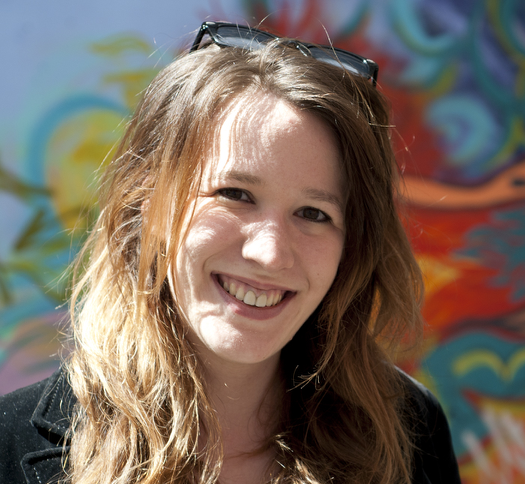
AnnaGuenther
Photo credit: Guy Ryan

As the driving force behind PledgeMe, New Zealand’s crowdfunding platform for creative projects, Anna Guenther is one of Wellington’s golden girls. Passionate about building resilient creative communities – online and offline – she’s found herself as somewhat of a beacon of hope for creatives at that awkward junction where art meets financial reality.

Since their inception in 2011, PledgeMe has helped to raise over one million dollars in pledges – recently celebrating this success with three consecutive parties on one street in Wellington, complete with puppets re-enacting Pulp Fiction, fairy bread and a complimentary walking-bus to ferry guests.

Anna joined me to chat about all things crowdfunding, the end of bootstrapping and her potential career as a rock-star.

Congratulations on reaching a major milestone of raising $1,000,000 in pledges. What is the next big goal on the horizon? 

One billion dollars? But, no, honestly – we’re aiming for one hundred million in the first five years. So, one million is great – but now we need to multiply that by a hundred!

pledgemepeople31
Photo credit: Tess Brosnan

You’ve recently jumped ship to work on PledgeMe full-time.  How big a decision was this and what were the major considerations for you and the business before taking this step?

It was a massive decision, but one a long time coming. I’ve had some really smart people telling me that you can’t be half committed…. and, that’s right.

If you’re in start up world there really comes a time when you just have to jump.

For us, it was realising that there really was a huge market in New Zealand – hitting the one-million-dollar mark proved this to us – and that it was time to focus.

How does PledgeMe set itself apart from similar models such as Kickstarter and the new local addition to the scene, Boosted?

We see ourselves as a local version of the mighty Kickstarter. Having a New Zealand focus means that we’re not just an online platform, but also an offline community. People see that what they’re giving is making a difference locally -and that’s important.

We also see the rewards side of what we do as enabling creatives to be entrepreneurial. It’s a new model, not reinventing the patron model of old, and we think that’s pretty powerful.

It’s insider tips time! What are your top three nuggets of advice for prospective crowdfunding campaigns?

I think the three golden nuggets would be:

– Pitch your project (and you) well. People need to see you in it, and understand why the funds are going to help make it happen.

– Have a video. Really. Videos make you at least 117% more likely to get funded.

– Rewards are rewarding. People don’t want begging, they want value. So show them what you’ll give in return – and make it a mix of physical and experiential.

What does the future of crowdfunding look like in New Zealand?

I think crowdfunding is the next BIG thing. It’s a tool to give the crowd the power to decide what’s cool and what isn’t, what deserves to be funded to happen (and what doesn’t). The power of distributed decision-making is so 2013.

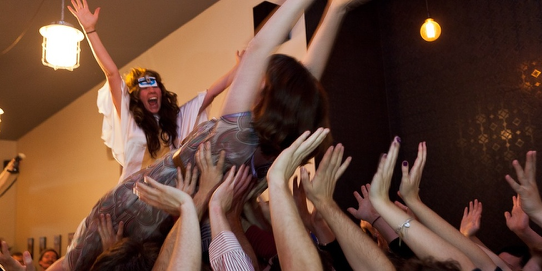
crowdsurfingthanksamillion
Photo credit: Kane Feaver & Bek Coogan

At PledgeMe’s ‘Thanks-a-Million’ celebration, you partook in some impressive crowd surfing! Are you a closet rock-star? Or is there another creative outlet up your sleeve?

More like a reluctant rock-star! I thought I was a bit of a fashionista back in the day, but now I’m just a massive supporter of the creative critters out there trying to do their thing. I’m really just a geeky fan of everyone!

About our Ambassador // Katherine Field is one helluva busy lady. In between holding down the fort as the Community Manager at the BizDojo, she is also back at university and helping to coordinate Startup Weekend Wellington. Find her on twitter as @kathfromwelly

Video: Does your startup have global potential? — May 2, 2013

Video: Does your startup have global potential?

Last week, The Fetch’s Kate Kendall spoke on a panel at Advance.org’s annual Lounge Chair Series. The discussion was on the global brand potential of startups – especially from an Australia to the rest of the world perspective. The panel also featured Andrew Roberts CEO and founder of Ephox, Rebekah Campbell founder and CEO of Posse, Leigh Jasper the CEO of Aconex and Sarah Backhouse the founder of Future 360 who also moderated the conversation.

Advance is a community of global Australians who are able to make a difference for Australians, Australian companies and Australia around the globe.

Check out the 50-minute video by clicking the image or link below!

advance

Does My Start-Up Have Global Brand Potential? from Advance on FORA.tv

Interview: Perth Local, Matt Sapsworth — April 19, 2013

Interview: Perth Local, Matt Sapsworth

This week, The Fetch Perth’s Curator, Justin Strharsky spoke with Matt Sapsworth, founder of Perth startup VisionBall.

Matt Sapsworth

Photo taken from VisionBall

Why VisionBall? What motivated you to build a business around capturing sports video from the ball’s perspective?

It was probably one of those typically cliched light-bulb moments, sitting watching a Wildcats basketball game I think, and I might have also just seen a motorsports broadcast where a camera was located in the car, and
put two and two together and thought well why can’t a video camera be located inside the action of this basketball game. The same opportunity to capture a different perspective of the game will then be available.

And then of course I realise lots of sports embed cameras in the action, stump cam in cricket is an example, but it is most common in sports and adventure activities where cameras are located on helmets, such as
skydiving, base jumping, mountain bike riding etc. And then there is Spidercam which is the cable suspended camera system you often see at large sporting events, or goal cameras in soccer matches and Aussie Rules
games. Last year the AFL even put camera embedded sunglasses on their goal umpires.

So I realise that broadcasters and their viewers want to get as close to the action as possible. So why not apply this same principle to the most popular sports on the planet, Aussie Rules footy, soccer, American football, basketball, netball and rugby and put the camera right in the middle of the action and inside the ball.

You’ve found a documented attempt to put a camera into an American football in 1938, what’s the story there? Did it work?

Yes, the 1938 Popular Mechanics article. What looks like a rather large film camera sitting in the middle of a wooden ball, which itself looks more like a round soccer ball than an oblong American football. Imagine trying to throw or kick that?

But you have to admire their attempt. And unfortunately I haven’t been able to find any further information on it but I know that even with the modern technology available to me and the technical hurdles I face I can appreciate that capturing any worthwhile footage would have been very difficult at that time.

How do you envision people using VisionBall? What are some creative uses for the footage people will collect?

I’ve had a lot of fun so far with the development of some basic prototypes across all the sports I am targeting and believe that VisionBall has enormous potential to capture sporting action from a unique perspective.
Whether it be from a basketball as it is falling through the hoop, or from a soccer ball as it is fired at a goalkeeper, or from the rugby ball as it is being passed through a scrum, or from an footy as it is kicked through for a goal, the possibilities are endless.

And personally I like that you will be able to see the faces of the athletes as they are playing the sport. See them grimace, sweat, curse, smile… all up close and personal. I am also impressed by the opportunities to display still images as well. It’s being able to capture a sporting moment from an angle that gives the viewer a unique and exciting view of the sporting action.

I am also enthusiastic about the interactive nature of VisionBall. Being able to choose whether to view the sport from the traditional external camera angle, or from the perspective of the ball. See
http://www.visionball.com/20121028bcyv2.php for an example of an interactive basketball VisionBal experience. This puts the viewer in control of how they want to view the sport.

Where the true potential of VisionBall lies is that it embeds the audience inside these sports and gives the viewer an up close and personal view of the action. It puts the viewer inside the action and allows the viewer to experience the game from the focal point of the game, the ball itself. It makes the viewer the focal point of the game. Which is why the VisionBall motto is “Be the Ball”.

How will they be used in professional games?

I see that VisionBall will be used in the same way embedded motorsports cameras are used, or stump cams, or goal cams, or Spidercams, in that VisionBall will compliment the traditional broadcast of the sport. VisionBall will add that embedded camera perspective into the broadcast of the most popular sports on the planet and give their viewers the same exciting visual opportunities that a lot of other sports and activities have long enjoyed.

With current technology I will be aiming to record an entire game using VisionBall onto storage inside the ball then this video footage is extracted for processing and used for replays or highlights of the game.

And with future improvements in the technology I use I envisage that VisionBall footage will be able to b broadcast in real time along with the normal broadcast of the game. And with future high speed internet access viewers will be able to change their view of the game in real time from the traditional camera view to VisionBall.

It seems like there must be a few technical challenges to embedding cameras in balls. Basketballs are bounced on hard surfaces, for example. How do you overcome these?

Oh yes, many technical challenges. The good thing is they are obvious and able to be overcome. And in the long run very much worth the effort.

Typically an Aussie Rules football weighs 400g, and the cameras I add to the ball weigh 100g. So my challenge is to reduce the weight of the combined ball/camera package to 400g. Very achievable.

And of course I also need to ensure the look and feel of a VisionBall ball is exactly the same as a normal sporting ball as well as ensure that cameras are concealed and protected. This is a big challenge as the simple
design of these sporting balls also makes their modification quite difficult. At the moment it’s a process of testing, learning, modifying and testing again. And so far I have learned how I need to not only redesign the ball for my requirements but also the best specifications for the cameras so that they capture the sporting action at an optimal quality.

So hopefully with some future investment and using what I have learned I will be able to develop a VisionBall that feels and performs exactly as a normal ball, only that it has video cameras embedded in it. The possibilities once VisionBall is ready and able to be used will be quite exciting.

You’te running a crowdfunding campaign on Pozible – what will the funds be used for?

Yes. I have completed versions one and two of VisionBall and have been very pleased with the results. I would like to develop versionthree which is a more robust version of VisionBall and test it with a wide range of enthusiastic supporters. I have specific camera requirements and plan to use the bulk of any funds raised to purchase thes cameras, as well as balls and various other equipment requirements.

The crowdfunding campaign is also an opportunity to get VisionBall out in the public and have it tested thoroughly as well as gather feedback on whether embedding cameras in a sporting ball is something that people want to see. And I am hoping that is the case.

Check out some of Matt’s VisionBall videos here:
http://www.visionball.com/#Be_the_Ball

Interview: Sydney Local, Clover Moore — April 14, 2013

Interview: Sydney Local, Clover Moore

This week our social innovation community leader Michelle Williams interviews the Lord Mayor of Sydney – Clover Moore. This is one of our best interviews yet – a must-read/bookmark for all Sydneysiders and city/government 2.0 geeks. 
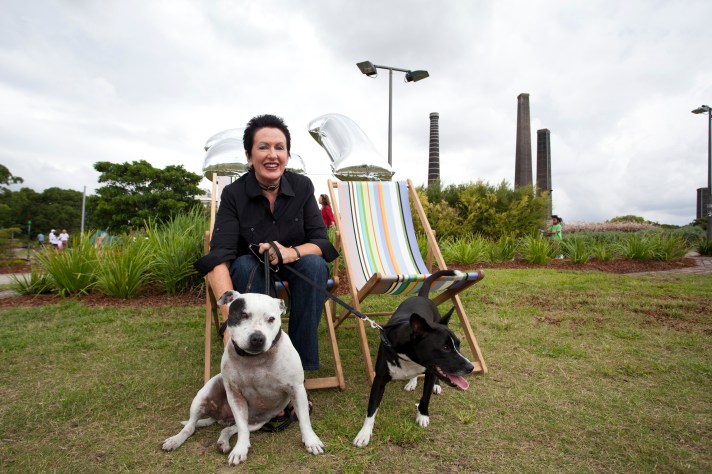
Clover Moore

Clover in Sydney Park

Clover Moore has created a city where people have a voice, can have go at being innovative, creative and entrepreneurial, to pursue their passions and, most of all, to have a good public, community life.

“Creating a good public life nails what it’s all about. That’s what my whole career has been about. Started off trying to stop traffic and to do something about local parks. Now I just do that on a bigger scale.”

What was your background before you became mayor? Did you have political aspirations from an early age?

Years ago I did something risky, something right out of my experience and comfort zone – and it completely changed the direction of my life. As a mother at home with two small children, I was dismayed that my Redfern neighbourhood was so run-down, with fast moving traffic in every street and children’s playgrounds that were derelict and dangerous. I wrote to my state and local rep who either didn’t get the problem or who flicked my letter onto some uninterested bureaucrat. So then I did something. I went round to my neighbours, gathered community support and ultimately founded Redfern Community concern. “You be our voice,” my Greek neighbours, mainly women urged. And without any background in politics, I stood for the Labor dominated South Sydney Council as an Independent. I was elected to the South Sydney Council in 1980.

After four years the council was amalgamated with Sydney City and three years later sacked by State Government. I was so angry at this blatantly undemocratic act that I stood for the 1988 State election as an Independent, becoming first the Member for Bligh and then, when boundaries were changed, the Member for Sydney. Then, in 2004, when South Sydney Council and the City of Sydney were both sacked and amalgamated in another attempt by the NSW Labor Government to take control of our city, I was urged by a team of like-minded independents to stand as the Lord Mayoral candidate to provide community leadership for Sydney, I agreed – at first reluctantly.

As well as mayor, you were also an Independent State MP for Sydney. What have been some major achievements or changes during your time in politics?

Our election and my position as Lord Mayor has given us great opportunities to improve life for our residents, our businesses and our visitors. We’ve beautified the city villages, created a series of award-winning parks and community gardens, and provided design leadership in award-winning bars, introduced bike lanes and provided affordable spaces for creatives and digital startups. We provide great services and a strong financial position – no debt. When I was forced to choose between Parliament and the City by the Coalition O’Farrell government last year, I left Parliament as the longest-serving woman in the history of NSW parliament.

clover-moore

Clover when she got the FOI bill through in NSW Parliament

I have been told continually from those first days in Redfern that it was not possible to get elected as an Independent, that I needed a party machine behind me, and even if I was elected, I wouldn’t be able, as an Independent, to achieve anything. But I found I could achieve a great deal by working hard for my community and representing them in Parliament.

Clover’s achievements in parliament are numerous. From 1991-1995 with two other Independents, they held the balance of power introducing the ground-breaking Charter of Reform, which included the Royal Commission into police corruption, and was described as the most progressive reforms in any Westminster system in the 20th Century.

I introduced private member’s bills that became law, or were included in Govt legislation, including anti-vilification legislation, making it illegal to incite hatred against gay men and women; to allow for same sex couples to adopt; and ended Kings Cross streets being used as de facto car sales yards; South East Forests protection bill and the small bar bill. Achievements in a Parliament dominated by major political parties and with my beginnings so unlikely.

“I’ve always been progressive, parliament thought I was radical. I was just doing what was needed.”

You are well known for listening to your community. How have you been doing this more via digital? What can we look forward to?

It’s always an important part of what I do. Always progressive about technology and communication. When I was first elected to South Sydney Council, we put out enewsletters that were very amateurish at the beginning, but have became more professional. I was the only one doing it at the time and it was handed around to party MPs who were told to copy it. Always held meetings with community and sought community views in most effective way. Now, of course, the most effective way is through digital media. A good example of is our Open Policy our strategy to revive Sydney’s late night economy, is ready to be finalise. We’ve had 20 roundtables and 11,000 people have talked to us. We did vox pops at 2am to hear from people in Kings Cross. We do what we need to do to talk to people who want to talk to us. The majority of people in this city are young and use social media. We still do the meetings, some people still like it. People don’t hold back in telling me what they think [which brings a laugh to both of us]. Doing community consultation means you know the majority wants this. You always do get the vocal minority, the naysayers. If you listen to them you never do anything.

What are the key ideas the City is implementing to enable a more liveable and green Sydney?

The 2030 plan is the overarching policy (for the City). It guides everything that we do. Environmental aspects are our top priority because we know that the future of the planet is important. We’ve got lots of ticks on that including photovoltaic panels, retrofitting, water harvesting and getting on with policies to do with tri-gen. Carlton Brewery site on Broadway is a tri-gen site that’s going to power a precinct. It’s part of the 2030 plan and that’s being done by the private sector. This also plays into the social sustainability plan and community networks which mean we’re more resilient as a community. We need to have long-term sustainable business and that’s one of the main reasons we’re so supportive of the startup community. We like to support communities doing stuff rather than doing it for them. Our grants program is an example of that.

It’s great to see City of Sydney supporting entrepreneurs and creatives through providing subsidised space and workshops. How did this come about and what other initiatives are you engaging in?

It originated from a Cultural City Talk in 2007. Three speakers from different creative perspectives and backgrounds, said we had great cultural institutions but what we really needed was to support our young creative talent. I don’t think they discussed it prior but there was a common theme. What really stuck out for me at this talk was Neil Armfield explaining that a troupe had gone to Melbourne but had not come back. They loved the small bar scene and the opportunities for musicians and for visual artists. Small Bar licensing in Sydney in 2007 was very expensive – $30,000 compared to $500 in Melbourne and we’d been waiting for years to see any sort of change in NSW parliament. In the 70s, Melbourne was dead and part of it’s renewal was built on creatives, to do with allowing people to do their thing whether that be grafitti in a laneway or musicians performing. And I said right, I’m going to do a small bar members bill, I’m tired of waiting for (former NSW Premier) Bob Carr. The two major parties had a problem with it but then there was a strong community reaction, the whole thing just took off. The government had nowhere to go but to agree with it and we got the laws changed. And we have 68 (small bars) in the city area now. Creative studios are a part of that too. We’ve supported setting up like Oxford St, the soon to open William St and 107 Redfern St, Redfern.

The strong message was we have to support creatives. It’s an expensive city, it’s hard to get going. That was the best way we could support creatives to get going and that’s how it all started. And it’s going so well.

Queen Street Studio is another example. During the five years it was available, 20,000 creatives used it. And support for things like GreenUps is another example. Everything we do in this area is well received and taken up.
clover-street-art

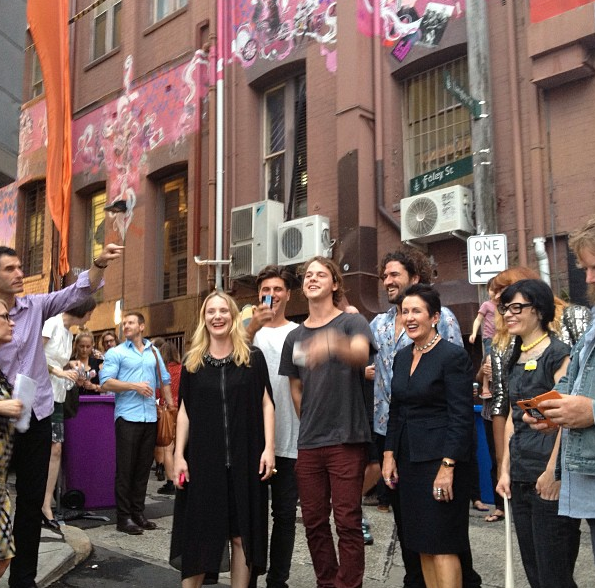
Launch of the artwork on Foley St on Friday night from Clover’s Instagram account

Why, in your own words, do you think this is so important?

[Said with a big genuine smile] I think it’s about our soul, about who we are, and supporting the cultural life of a city like Sydney is probably one of the most important things that you do. We have 200 nationalities here, what is our cultural identity and how interesting are we? How is that reflected back to us?

Do you draw inspiration from any other cities or governments from around the globe?

Portland is a city that inspired. I was encouraged that they started their bike lanes in ‘94 and they had the same backlash I met. Same with their light rail. They were doing a lot that we’re now doing. It seems a very civilised city. Copenhagen too. At the Mayors conference for COP15 people gathered for Earth Hour. It was freezing and 6,000 people gathered. I had a great sense that the people know who they are, very content with themselves. I was amazed that after, everyone dusted the snow off their bike seats and rode off! In Scandinavian countries the royalty sends their children to public schools. I was shown street after street where cars had been and now they’re for people. And people gathered there, sitting in outdoor cafes, in freezing temperatures, wrapped in blankets. I was struck that they know who they are and what sort of government they want. And they know what sort of contribution they want to make. Very impressive. What’s the difference to here? Good government. I despair about Barangaroo and how corrupted that process is. It’s one of the most beautiful sites. I think good cities are about visionary government and making sure that’s what people get.

People, politicians, media and vested interests haven’t made your path easy in achieving progressive outcomes (challenges many of us face in trying to build businesses). How do you overcome these?

Do your homework so you have the confidence in what you’re doing. Be brave and bold and stand your ground. Stand your ground!

My whole career I was told: “You’ll never do that”. It’s about believing in what you’re doing. That’s critical. It’s about being bold. My husband has said to me “This is a big risk for you” and I’ve said “It’s the right thing to be doing now”.

Do you have regrets?

No regrets, although always sacrifices in what you do. This has dominated my life and my family’s life. I always thought it was worthwhile. You only get one go at life. My CEO says to me “Sleep when you’re dead”. You pay your rent, you make your contribution.

Where can we go for info on how to make it easier for us to develop businesses? Are there any special grants or events the community should know about?

This is so important for us, we see if we can help support, facilitate and empower. We have an economic development unit and this is one of their most important areas of work. When we identify a need, we respond and do something about it. The Economic Development Unit work closely to support in a number of ways. For example, little cafes, we coach through the process and offer grants. When the first small bars opened we worked with them to give some clear guidelines. 101 Startups is another great example, also our Let’s Talk Business Seminars. These bring people who have experience, are inspirational and can offer practical advice. We know (for entrepreneurs) it’s about having the energy and enthusiasm to do it and then you need the practical advice, you need encouragement too.

[Clover, the City of Sydney and Alex Greenwich MP are interested in hearing from you, your ideas on how they can help, what you need and what would make it easier. Please leave a comment below or tweets us @thefetchSYD]

What’s your favourite thing to do in Sydney? How do you switch off? How do you clear your head, stay fit, maintain your general sense of wellbeing when you are busy with your Mayoral duties?

Walking in Sydney’s beautiful parks is one of the things I choose to do most often, with my Staffies and my husband. This is also how I switch off. I get to talk to my husband, and talk to everyone else, they never hold back!

What is your vision for Sydney?

Sustainable, equitable, culturally vital city. The reason we chose to live in Redfern, when no one else would, was because it’s where we could afford. One of the reasons is we’d lived overseas for a while and the Greek families sat on captured milk crates in their street, and kids played in their back lanes, a sense of community, street life. So much more important than in the suburbs where people drove to their houses, only seeing people when they invited them over. I’m really thrilled that over the last eight years because we’ve beautified streets, added wonderful facilities and great parks – there is a whole lot of street life that did not go on before.

rainbow-crossing

Clover crossing the rainbow crossing on Oxford St for Mardi Gras

The beginnings were with the migrant communities, now everyone engages with that. Gays with their dogs, young families or an older couple. Suburbs don’t engender that. In the city you may live alone but because you go to this park. If you’re not lucky enough to have a personal family you can have this other family. We tap into, support and provide opportunities to connect. We do it through creative support but also our bike and pedestrian paths, wonderful parks and public communal spaces. We create a good public life, rather than just a good private life. In suburbia you may have a private life around your pool but how much better is it if you have a good public life? Creating a good public life nails what it’s all about.

That’s what my whole career has been about. We started off trying to stop traffic and do something about local parks. Now I just do that on a bigger scale.

About our ambassador // Michelle Williams is the CEO & Founder of Ideaction. She’s a connector, collaborator, communicator and innovator for systemic change. Follow her on Twitter as @MiA_Will.

Interview: London Local, Ben Cooper Melchiors — March 21, 2013

Interview: London Local, Ben Cooper Melchiors

This week, The Fetch London’s Community Ambassador, Alexandra Leslie spoke with Ben Cooper Melchiors, Hub General Manager for IdeasTap.

BenCM

So let’s get to know each other! Can you tell our readers a little bit about yourself?

I’m a theatre creative and an arts manager. So I see producing and managing in the arts as an inherently creative process. My background is in theatre and arts admin, previously working in management roles at Battersea Arts Centre, starting with Punchdrunk’s Masque of Red Death, the National Youth Theatre, producing for artist Franko B and project managing the building of a theatre from 3 tonnes of reclaimed timber within The Red Room’s Oikos Project. Now I am Hub General Manager for IdeasTap, providing 50+ companies with an office via our skills swap programme, Creative Space.

I like building creative stuff: projects, performances, buildings, systems, companies, etc.

Before it’s launch in 2008, IdeasTap was just an idea. How did IdeasTap become a reality that’s helped other startups come to life?

Founded by the Peter De Haan Charitable Trust, arts charity IdeasTap is a creative network that provides funding, opportunities and advice for creative people. At its heart is the idea that placing yourself within a network is key to professional development, as well as gaining access to the opportunities and resources needed to build a creative career. Since 2008, the charity has developed a really useful website and partnered with creative industry leaders while looking to deliver the best opportunities possible to our members. And now IdeasTap specifically helps startups through Creative Space.

How did you come to be involved with IdeasTap?

I have been an IdeasTap member for years. However, after working in the same building for one of their partners the National Youth Theatre, IdeasTap offered me the job to develop Creative Space, since I knew the facilities well and could apply my MA research on creativity and professional experience in arts management.

What is the IdeasTap Creative Space programme?

Launched on a large scale in June 2012, Creative Space offers creative startups and freelancers access to Central London office space on a temporary basis, paid for via skill swap. This programme mirrors what the whole charity does: providing self-starters (often) their first office, meeting rooms, events and a network of other creatives needed to reach “the next level.” We have theatre companies, dance producers, film production companies, graphic designers, illustrators, writers, journalists and more working from hot desks and “paying” for it via a few days of creative freelance work for IdeasTap per month. Check the current residents out via our Twitter list.

What are some things you enjoy that you incorporate into your work with Creative Space?

I think creative culture is a big part of succeeding as an artistic company or freelancer. That means understanding your working culture, creative process and the professional nuts and bolts of managing your work. So I love it when I can help startups in Creative Space learn and find their right balance between chaos and structure to enable creativity on a professional level: work space, hours, inspiration, contacts, context and efficient ways of managing the requirements of business.

What has been one of your favourite projects you’ve been able to work on at IdeasTap?

Due to the skill swap, there’s always hundreds on the go! Some a few hours and some months long. We’ve had fantastic free events for the IdeasTap Spa pitched and delivered by Creative Spacers, such as how to monetise online content or sort out your freelance working lifestyle. We also commissioned a radio play project delivered by Creative Spacers Heritage Arts Company. Writers submitted a radio play treatment, received feedback from leading playwright Ella Hickson, had their full-length scripts read by actors in a workshop at our headquarters and finally the best scripts are being recorded now for publishing on SoundCloud. It’s exciting to commission our members in Creative Space to deliver excellent opportunities for other members, where, for example, a writer can be really imaginative, go on a journey and be showcased professionally to agents and venues—without needing a huge theatre production budget.

If you could choose any sort of business to work with Creative Space, what would it be, and why? Be creative ☺

We are excited by all creative businesses! The key for applicants is to be beyond just the idea phase and to know where you’re going, with a realistic plan for how to get there. That means companies must be trading for six months or working as a freelancer for a year. We do keep an eye on what skill sets we need as a company, and we’re looking to fill our remaining spots with those with digital/web design, graphic design and professional journalism skills.

What are your favourite things about the IdeasTap website?

It’s immense! I’m surprised by the depth of it sometimes. The search engine can be quite cool, to find IdeasMag articles, opportunities, events and people based around a keyword that matters to you. I also think the free IdeasTap Spa events are invaluable to learn about or top up on niche professional creative topics. Lastly, the Education Resources, Funding and Finance hub pages are hidden gems.

_____

Written by Alexandra Leslie, The Fetch London Community Ambassador. Video blogger for Newspepper.com and TechFluff.TV. American student in London, finding her way around the city one iPhone app at a time. Follow her on Twitter at @AlexandraLeslie

Design a site like this with WordPress.com
Get started