The Fetch Blog

Curated reads and events for professionals

Coffee talk: Cap Watkins, VP of design at BuzzFeed — July 27, 2015

Coffee talk: Cap Watkins, VP of design at BuzzFeed

Cap Watkins has an impressive professional background. Before joining the BuzzFeed team as VP of Design, he held roles at Etsy and Amazon, helping create user experiences that people still love today. Cap is also a keynote speaker at this year’s upcoming Web Directions Conference where he’ll talk about building a design-driven culture.

Today, Cap tells us what he loves (and fears) about his current role, what he looks for when hiring designers, and exactly how BuzzFeed creates such addictive media experiences.

How did you get to where you are today?

I wonder this a lot, honestly. I think a lot of it has to do with being able to identify roles that will push me to learn more and then, at the same time, not being afraid to go all in, even if I super mess up. When I moved on from startup life in San Francisco to Amazon in Seattle, that was pretty scary: it was a big company with lots of bureaucracy to navigate (compared to a five-person startup). When I moved from Amazon to Etsy, being a first-time manager was incredibly frightening and challenging (not to mention figuring out New York). And now, as VP of Design at BuzzFeed, having a more nebulous role with influence over the organization definitely keeps me in a consistent state of “holy crap, am I doing this right?”

I think if your current job isn’t challenging you or freaking you out (at least a little), you should look for a new gig. Fear = growth. It also means that you’ll be conscientious about the job you’re doing, which actually puts you in a better position to succeed. Embrace the fear.

Finally, and I can’t stress this enough, identify people who are way smarter than you and engage with them regularly. At Amazon, I met Aaron Donsbach — and it was immediately obvious that he was the best designer on the entire team. We weren’t sitting in proximity to one another, but every day I made sure to sit down at his desk and just talk with him about what he was working on and ask for help with what I was working on. Eventually, we became pretty close and he became my manager. He taught me so, so much about design and how to think more deeply, as well as how to successfully navigate design discussions with the executive team. We’re still in touch to this day, and I still think of him as the best mentor I’ve ever had. He really shaped who I am now.

What’s a ‘typical’ day as the VP of Design at BuzzFeed like? What has been your biggest challenge in the role so far?

I’m sure this is no surprise, but “typical” isn’t a word I’d use anymore for my day-to-day. I could be recruiting folks to work for us, or meeting with the Design Directors in Editorial, or giving feedback on some Product Design work in Basecamp, or discussing organizational issues with the rest of our Tech Leadership team or even prototyping a new idea I have.

What I really love and fear about the role I’m in now is just how flexible and fungible it is. It’s really up to me to make it whatever I want it to be.

No one is stopping me from doing stuff and, in most of the cases, I’m enabled to do more. For instance, I thought it might be a good idea to do a Hack Week, so I suggested it. It’s been a couple of months and we’re just now finishing up our very first Hack Week. It’s kind of insane and great.

I’d also say this is the biggest challenge so far. BuzzFeed is a gigantic place with a ton of different versions of what “design” means. I’m trying to tie as much of it together as possible, but it’s nebulous and requires a bit of patience and long-term strategic thinking. It’s a process, and you have to look back and take stock of what you’ve accomplished every so often. Otherwise, it’s easy to get discouraged.

You’ve helped shape some incredible media experiences at companies like Etsy and Amazon. How often do you draw on previous experiences and learnings in your current role?

All the time. At Amazon, I learned a lot about systems-thinking and deep UX processes. Etsy was a crash course in using both quantitative and qualitative data as part of the product process. I think about these things all the time at BuzzFeed, and advocate as much as I can for us to adopt the learnings from those previous experiences. Obviously, holistic UX thinking and using data to drive work is valuable regardless of what company you’re at.

A lot of folks ask me what it’s like going from a couple e-commerce companies to a media company, but the truth is that the differences aren’t that big when you abstract them out. We still need to ship good products that measurably improve the user experience. And whether that’s for an online store or a publication, the methodologies are the same.

BuzzFeed is one of the most engaging and addictive media experiences out there. Which critical components are required to keep a visitor’s attention?

Good content. That’s it. We could design the most beautiful and usable experience in the world, but if the content isn’t great, our work doesn’t matter.

Our editorial staff is the real engine that drives BuzzFeed and it’s up to the product team to support our editors in experimenting with new formats and ideas, as well as create a reader experience that set that content up to be as successful as possible.

How do you help build a design-driven culture?

Transparency and collaboration are two primary focuses for us lately. You can’t be design-driven if design is secret alchemy owned entirely by designers. I think that’s a mistake a lot of designers make – they think they need control, when they really need to give it up.

If we can get engineers and product folks to contribute to the design process, and if we can contribute to the product roadmap and code, then whoa, now everyone is a designer/engineer/product person.

What, if any, intentional process do you use to hire designers at Buzzfeed?

We have a pretty straightforward recruiting process that starts with sourcing as owned entirely by the design managers. I love our recruiters to pieces, but I discovered at Etsy that our hit-rate was way higher if we owned sourcing and driving the process as much as possible. Here’s the short version of our process:

  1. A design manager finds/reaches out to a candidate.
  2. First phone screen to talk generally about the candidate’s process, the role and BuzzFeed.
  3. Second screen to walk through a couple projects in detail. Looking for process artifacts and asking questions about what worked/didn’t work.
  4. Interview Loop: meet with a couple designers, a product person, an engineer.
  5. That’s it!

What qualities and skills do you look for?

Critical thinking, collaboration, and curiosity. I find that people who possess all three of those things tend to have the hard skills to get done what we need to get done. We require that all our designers write their own html and css, but that doesn’t mean we require all our candidates to be masters at it. We do an html/css live-coding session with one of our engineers during the interview loop, regardless of the candidate’s skill level. The engineer who runs the session is obviously looking at the candidate’s current skill set, but more importantly their ability to learn. We’ve seen these sessions turn into basically the engineer teaching the designer how to write their very first html and css – and then we hire the designer. The enthusiasm and curiosity are critical.

What’s the biggest change you’ve seen in design and media experience over the last year? Over the last five years?

In design, I feel like I’m seeing more and more people call themselves “designers” while only focusing on making things look good. I think Dribbble and Behance are good things, generally, but their emphasis on visual design has made a lot of young designers think that’s what matters most. I’ve interviewed a lot of folks whose work is beautiful, but falls apart under even the lightest of UX examinations.

My concern with the trend is that I remember our discipline spent years and years convincing our industry that we’re not pixel-pushers, that we should be a part of the entire process. The re-focus on just making things look cool may wind up biting us in the ass at some point (and may already be). It certainly isn’t helping the perception of design, in any case.

What about BuzzFeed do you find most exciting?

The types of content we design for at BuzzFeed are just so varied that I still have trouble wrapping my head around it. When I tell people that the BuzzFeed Videos we make have over a billion views a month, they’re blown away. Or, and I didn’t know this before I started, we have Pulitzer Prize-winning editors on our News staff who lead long-term investigative journalism. And we just built a test kitchen for our Life editors to shoot original recipes and cooking tutorials. It’s a pretty awesome time. Most people think BuzzFeed is all Lists and Quizzes (which we also love!), but it’s so much more than that and you’re really going to hear more and more about those things in the future.

Where can we find you in New York City?

Mostly in Brooklyn (I work in Manhattan, but it’s really not my scene). There are a lot of great restaurants and bars my neighborhood. On a hot summer afternoon I dig hanging out at Gowanus Yacht Club or Swan Dive. For everything food, Frankie’s, Prime Meats, and Buttermilk Channel are my go tos.

Last, how do you like your coffee?

Soy cappuccino all day.

Web Directions is Australia’s longest running digital design, product and engineering conference. Learn more about Cap’s upcoming keynote and register for this year’s event here.

Coffee talk: Christine Amorose, blogger and brand partnership manager at Vimeo — July 19, 2015

Coffee talk: Christine Amorose, blogger and brand partnership manager at Vimeo

Christine Amorose is one of those rare people who can somehow do it all. When she’s not managing brand partnerships at Vimeo, she teaches yoga and writes for major publications like Condé Nast Traveler in addition to posting regularly on her popular blog, C’est Christine. We were lucky to catch up with Christine in this week’s edition of Coffee Talk, where she shares what she loves about her job, the coolest partnerships she’s working on, and where she hangs out in NYC.

How did you end up where you are today, working on brand partnerships at Vimeo [and blogging at C’est Christine]?

I used to work in marketing and social media for a photography-related brand, and I loved the photo/video space. We also used Vimeo to host our lifestyle/product videos, and I was really impressed by the quality of the site and quirky brand voice. I thought that Vimeo would be a dream next step in the industry. When I started yoga teacher training in early 2014, the girl who sat next to me on the very first night of training introduced herself and said she worked at Vimeo. I immediately thought: I have to be friends with this girl! Well, I befriended her and learned more about the culture at Vimeo and the work she was doing on brand partnerships–and less than six months later, I was working with her. In addition to my full-time job at Vimeo, I also blog about travel and lifestyle at CestChristine.com and contribute to publications like Afar and Condé Nast Traveler.

Which brands have been most memorable to work with? 

We just launched the Connected Series with Samsung, which is such a cool example of the work we do. Samsung and Vimeo teamed up to ask 10 amazing filmmakers to explore the idea of connection, and each piece is so unique and true to the filmmaker’s style and vision. My personal favorite was Elemental by : : kogonada: he basically showed how humans went from rocks to computers, and it’s all so beautifully edited with absolutely perfect sound design. It’s awesome when brands like Samsung are willing to fund projects that push boundaries and spark conversations.

What’s your favorite thing about the Vimeo product?

The videos! Vimeo is home to some of the best videos on the internet, and our Curation team is fantastic at finding the ones that are truly worth watching. I also love how supportive the Vimeo community is: the comments are always so positive, encouraging, inquisitive. There’s a low tolerance for trolling and a real celebration of creativity, which makes watching and sharing good work a very pleasant experience.

Who has had the most influence on your career so far?

To be honest: probably my mom! She has always encouraged me to go meet new people, to travel, to take some career risks. When I was debating quitting my first job out of college to move to France, she told me that there would always be jobs for good people — and that you can always make more money. Those two pieces of advice have been key in how I make career and life choices.

Outside of the office, you’re an adored travel writer and blogger. What made you want to start sharing your stories?

I’ve always wanted to be a writer: I was constantly writing stories as a kid, and I majored in journalism. And then I decided to start traveling, and suddenly life seemed a little more interesting and worth sharing. I’ve been blogging for five years now, and I just don’t know what I would do with all these thoughts and musings and photographs if I didn’t have an outlet for them.

Where do you find inspiration?

So many places! Travel is a go-to source of inspiration: new places, new people, new routines forces me to look at things differently. And I find that I can mimic that type of inspiration just by exploring a new neighborhood in New York City. I love that you can live in this city for years and constantly discover a new street, restaurant, park. I’m also so inspired by my friends who are pushing boundaries, starting businesses, creating a niche for themselves through photography, art, words, and technology. I have a few friends who I love getting coffee with because I always leave the cafe so buoyed with optimism and new ideas.

What do you want to learn next?

How to make videos! I’ve been playing with making iPhone videos using the Cameo app and I watch so many videos working at Vimeo that it’s made me more curious to explore telling stories through video.

Where can we find you in NYC?

Grabbing a coffee at Sweatshop or Happy Bones, biking around Prospect Park, catching up with friends over cocktails at Gallow Green or an ice cream at Oddfellows — or most likely, stuck on the L train.

What are your can’t-miss events in NYC?

Rooftop Films, Travel Massive, outdoor yoga at Bryant Park.

How can we connect with you?

Instagram! Twitter! Email! I’m on all the networks, and I love catching up over coffee when my schedule permits.

Last, how do you like your coffee?

Iced with almond milk in the summer, in latte form in the winter. No added sugar!

Coffee talk: Krista Gray, director of community operations at The Fetch — July 13, 2015

Coffee talk: Krista Gray, director of community operations at The Fetch

Meet Krista Gray, the new Director of Community Operations at The Fetch! A passionate traveler, Krista also loves tech and bringing people together. Here, she shares her story and why she’s so excited to be working with The Fetch community.

How did you end up where you are today?

Still in my first few weeks of experimenting with life as a ‘digital nomad’, I’m currently working from one of my oldest friend’s newly purchased home in Connecticut. This is amazing because I left New England about seven years ago to pursue a change of pace in California. My time on the West Coast has consisted of a two year stint in Carmel-by-the-Sea before moving to San Francisco to help build a startup (which turned into several startups over a five-year span). Just recently, I left my last role to spend this summer with people I’ve missed dearly for nearly a decade. The best part? While I’m temporarily back where I started, I’m able to work with The Fetch!

Why did you want to get involved with The Fetch?

I’ve followed The Fetch since meeting Kate Kendall at a Skillshare class she was teaching about Community Management in 2012. At that time, I had just moved to the city and jumped into the entire startup ‘scene’. The concept of The Fetch resonated so deeply with me as it was exactly the kind of resource I found myself searching for. Starting over in a new place/industry is overwhelming, and having a cheat sheet for the the right kind of events along with access to carefully curated, intelligent reads can make it much easier to get acclimated and involved.

What things excite you about our community right now?

The sheer volume of incredible things that Fetchers are working on! I’m so impressed with the passion and knowledge each person brings to the community, and eager to help them all make the most of their work-life.

What events do you recommend in San Francisco?

I love Inforum (a division of the Commonwealth Club) for their conversation series. I recently had the pleasure of watching Molly Ringwald interview Judy Blume at the Castro Theater, and it was really enlightening to hear each woman discuss her respective creative endeavors, sources of inspiration, and challenges encountered over the last twenty years. These events are also a great place to network with like-minded people and make new friends.

What’s your favourite thing about your city?  

The weather. No, seriously! A lot of folks complain about the fog, particularly in the summer, but I think there’s a certain bit of magic to it. I love San Francisco’s temperate climate and the opportunity to layer clothes everyday, nearly year round. ‘Sweater weather’ has always been my favorite. 🙂

What’s unique about San Francisco?

I think the people are what make San Francisco truly special and unique. The tech industry attracts such a diverse range of people from varied cultures, backgrounds, and experiences. I’ve found that people I’ve met in San Francisco also seem to share a sense of heightened awareness in terms of gratitude — it’s refreshing to be surrounded by such great minds that are also deeply appreciative.

Where can we find you in San Francisco?

If I’m not at The Roastery, you’re likely to find me at a Bar Method class or getting fresh air in one of my favorite places: the Lands End Trail, Palace of Fine Arts Theatre, or Crissy Field. I’m also a huge fan of sunsets, and like to watch them from friends’ roof decks or the city’s best vantage points.

How can we connect with you?

Keep up with my adventures by reading my journal, or give me a shout on one of my favorite social sites — Twitter or Instagram.

If you didn’t live in San Francisco, where would you be?

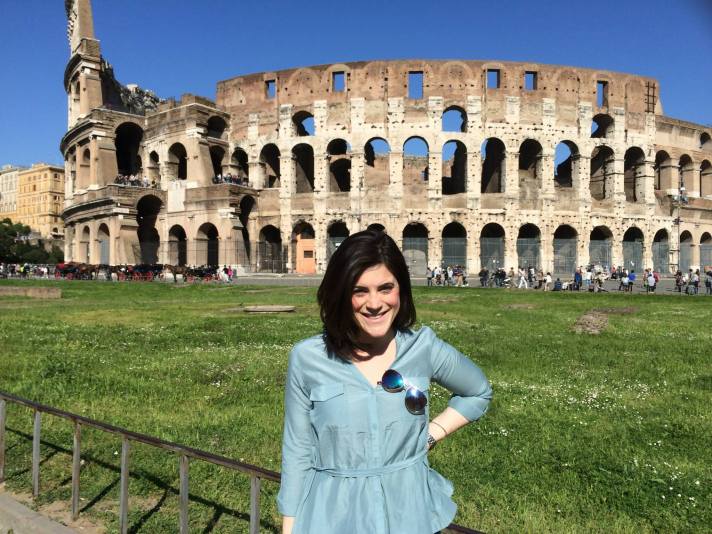
San Francisco is easy to fall in love with, and really difficult to think about leaving for a long amount of time. However, if I didn’t call the City by the Bay home, I think I’d try life in a European city. I’ve spent a fair amount of time in Rome and marvel over how different the daily grind is. I think we learn the most when we push ourselves out of our ‘normal’ routines and overlaps, and trying something so different could be a really fun and productive way to keep growing personally and professionally. Time will tell!

Last, how do you like your coffee?

It depends. I’m somewhat of a rare breed in that I don’t have a go-to coffee selection. I’ll often drink it black, but there are days that I mix in cream and raw sugar. Additionally, I can never resist a coconut iced coffee at Breaking New Grounds in Portsmouth, NH when I’m visiting home. They flavor the beans, and it’s simply the best.

Interview: Dan Martell, founder of Clarity marketplace — January 6, 2015

Interview: Dan Martell, founder of Clarity marketplace

dan

Ashley Bloom talks startup lessons, the investment mindset and futurism with the prolific entrepreneur, Dan Martell.

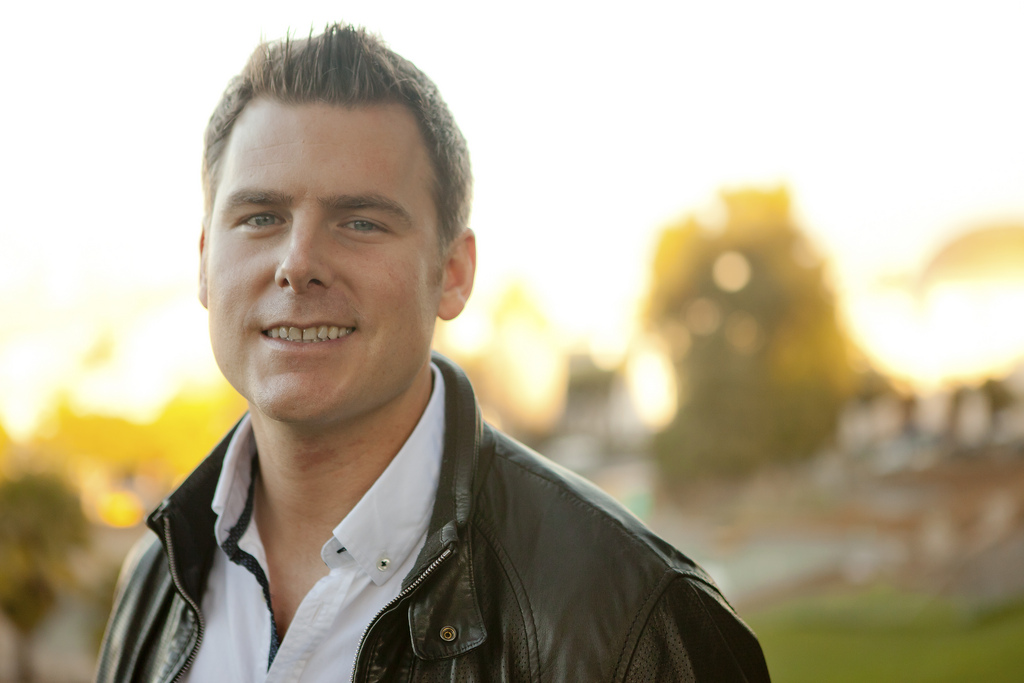
Feeling weary just before midnight, I was met by the steely gaze of Dan Martell, a proud Canadian, husband, and father of two young boys. He’s a five-time tech startup co-founder (two failed and formative, two successful acquisitions), frequent investor and 500 Startups mentor, with all his current focus on Clarity, a platform for paid business advice via phone calls.

Within a few minutes it’s as though I’ve downed a long black or two, buoyed by Dan’s high energy and very Canadian earnestness.

His biggest two lessons from failed startup number one (Maritime Vacation) and two (New Brunswick Host):

  1. He picked too small a market (Canada only, and the very specific niche of cottage vacations that was limited to a market of 300). The action step: Think bigger than your neighborhood, street and city.
  2. He picked a commoditized industry (web hosting) in which the margins are tiny, many customers demand service 24/7, and servers can break down at any time. The action step: Build a differentiated service/product (not a commodity) that cannot be easily replicated, or there will always be someone willing to do it cheaper than you.

Startup Truth Bombs and the investment mindset

Dan explains that since the DNA of the founding team is found in every aspect of a company, what matters more than oft-touted product-market fit is product-founder fit.

Why did you start Clarity?

When I started Clarity, I never thought there was a better idea that had such alignment with who I was as an individual, that I cared more about, as well as a business that could have a big impact… you see it in all the great companies, where the person had deep domain experience, a passion for the customer, and they couldn’t help but start a business to try and solve the problem… the bad examples are completely the opposite, where somebody shows up with a spreadsheet and says… “here’s the opportunity.”

What aspect of running a business is where you shine most?

My default state is trying to find the hardest, biggest problems in the business and solving them. Three months is the longest I can spend on one thing. That’s it. That’s my timeline… Once it’s figured out, I’ll build the team around it to execute. If it’s fundraising, I get it done is six weeks. After three months if it hasn’t made progress then either the problem’s not important, the people around the room are the wrong people, or something changes.

That question right there: ‘What do you want your day to look like?’ is way more important than how much money do you want in the bank. Because some people have $100M in the bank and their day is just totally fucked with back-to-back meetings. They’ve created this nest of bullshit that they have to be involved in. And they’re not happy, and they don’t know how to go back from it… Most people should start off saying ‘In 10 years, what do I want my day to look like?’ not how much money do I want to have.

Is your current business always your Everest? Can you see over the horizon?

I don’t imagine the next thing. To me, there’s enough opportunity in Clarity to be a $10B company… We’re going to be doing a big push into organisations with Clarity for Organizations, which we’ve already tested at 15 companies, where they’re deploying it to their employees. You can imagine the future of learning at companies and corporations. It’s for Millennials. People want self-directed learning. They don’t want to take a course. They want to talk to people who have experience that can give them context.

What’s ripe for investing now?

Anything I find interesting, I just invest in. I’m super bullish around Bitcoin, 3D Printing, Drones and Wearables.  I meet entrepreneurs through Clarity, which is great, since we have some of the smartest entrepreneurs in the world. I don’t need to build the companies anymore to feel like I’m still around and participating in these really disruptive technologies. I’ve done 33 investments, almost 34 now. The cool part is that it allows me to be interested in the new and innovative, but also continue the absolutely content focus on building Clarity into a big company.

Finding clarity and mentorship 

Your blog alludes to being on medication and having a wild upbringing, can you share more about this?

When I grew up, I had a pretty crazy lifestyle. I call it a colorful upbringing. The truth is, I just needed to find something to do that wasn’t illegal. No matter what it was, I was gonna go all the way with it.

This year I’ve already spoken to a dozen groups of kids that are in that kind of scenario. About 13-14 years old, to let them know that what they’re doing… the focus is wrong, but who they are and their skills are absolutely necessary and important and they’ve just gotta channel them.

Perhaps their talent is there, but not in the form of our current education system?

They are talented. That’s the funny part. I know. If I want anything in life… If I want money, I want love, I want relationships – all that stuff. You got to  put it out there first. To me, spending time with these troublemakers is paying it forward. I just can’t have it in my life unless I give it away.

Where would you be today without those sorts of mentors?

I wouldn’t be here, I’d be dead. That’s a guarantee. You can talk to anyone in my family. It’s really the power of the 15-minute conversation… [just like the] moment when someone pulled me aside and said to me, “This really isn’t for you,” and it was the first time in my whole life (at 16) that somebody said that. Even if it’s just the parents or the kids… anytime I’ve just gotten up and shared my story, I know one person out of 100 will change their direction. Because, what’s really important in all this and ties into Clarity is the messenger is more important than the message.

So you have two people go up and say the exact same talk. Me, who has gone through it, and somebody else who read the book. The guy who read the book, people are going to dismiss. Me, they’re going to listen…

So I know my responsibility as somebody who has gone through that specific scenario is to pay it forward, because it’s a very small amount of time that I believe can have a huge impact. So I’d be an idiot not to do it, plus I feel like the only reason I was ever given the opportunity to do this is because I was supposed to give it back.

There’s a great book called ‘Now Discover Your Strengths’. You know, stop trying to be great at things you’re not good at, but instead mitigate them so you’re not crippling yourself, but figure out the things you’re really great at and passionate about and double-down on those. That  was a turning point for me.

Futurism and technology

What do you see will change in tech and business as another ~2 billion people get on the Internet in the next five years?

Knowledge workers losing their jobs to marketplace freelancers. See article Five Reasons Half of You Will Be Freelancers in 2020.

Do you believe in Ray Kurzweil’s (futurist, inventor and Google director of engineering) assertion that a technological singularity will occur?

The biggest concern I have is around AI and how that plays out. When you have computers building other computers (seeing this already with 3D printers), then it’s really about the computers. With the advent of quantum computing coming online within the next 5-10 years, then AI will be a major issue.

What are the most exciting few companies in the world (besides yours) right now?

Less companies, more technologies:

About our writer // Ashley Bloom is a humanoid ball of stardust residing in Melbourne, Australia. One who enjoys writing, expansive living and multifaceted learning. Follow him on Twitter @AshtrayBroom.

Earthships: The future of sustainable living — July 5, 2014

Earthships: The future of sustainable living

IMG_6146

We recently sat down with Mat Holroyd to discover more about sustainable buildings – specifically Earthships. Don’t let the name fool you – in 10 years time you could well be living in one.

What are Earthships? What differentiates an Earthship from other types of (sustainable) housing?

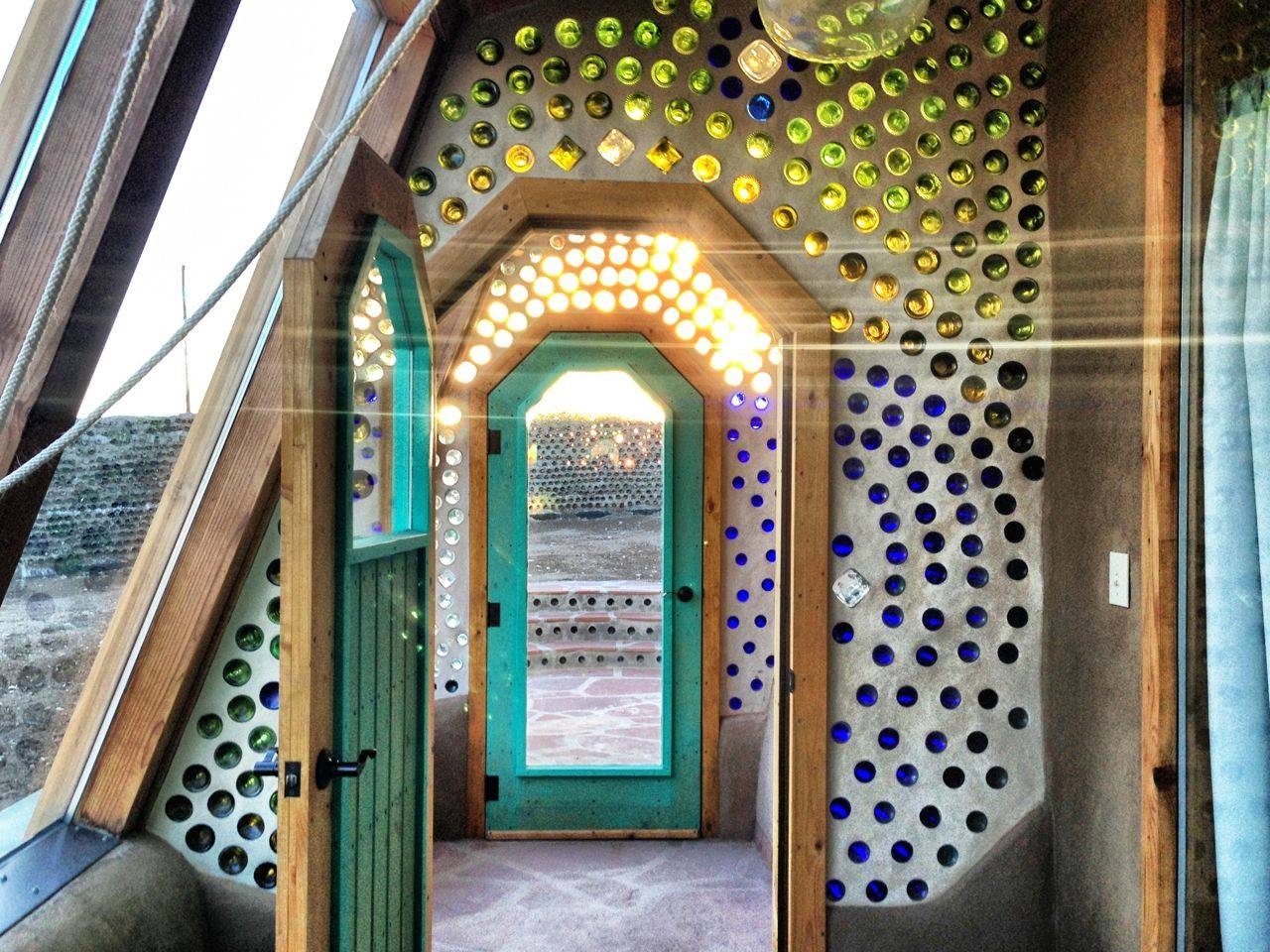
Earthships are buildings designed to minimize the fuel and resources needed to run the building, while reducing the waste that leaves the house. Earthships typically collect their own water, generate their own electricity, and the grey water is treated onsite. Additionally Earthships are typically built with recycled material, and when you put all these aspects together, the houses are often labeled as “sustainable”, “environmentally friendly” etc.

I should mention Earthships are the houses invented and built by the company Earthship Biotecture. Anyone who’s interested to learn how to build Earthships can buy their books or study at their academy.

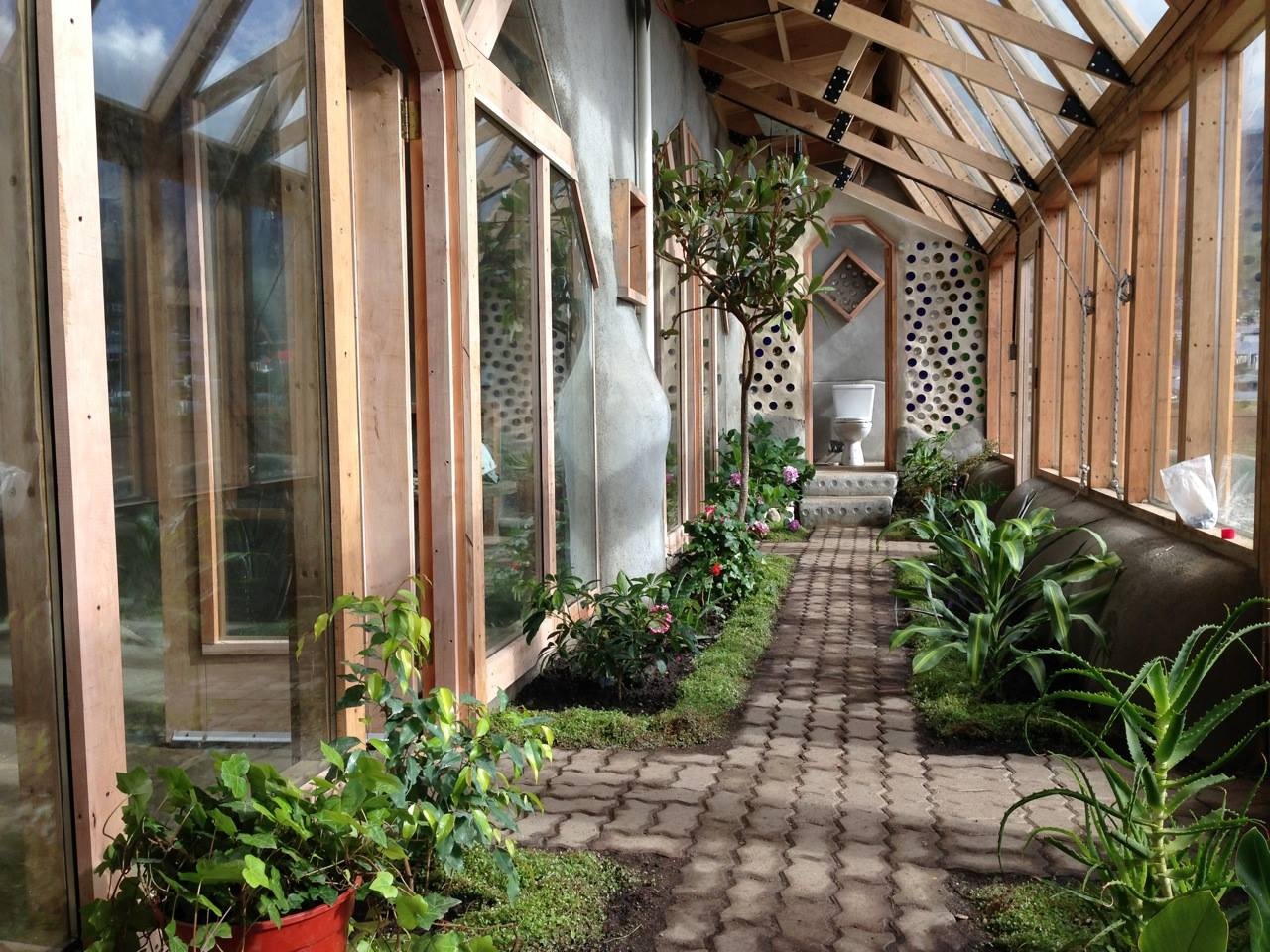
As to what differentiates Earthships from other sustainable houses, probably the most distinctive feature of an Earthship is that all the different systems (electricity, water, sewage treatment, growing food, heating/cooling, recycled materials) are cohesively integrated. That is to say, Earthships are well-designed machines, that have been tweaked over decades to bring all those systems together in a practical yet pleasant package. Because of this Earthships have a very distinctive look – they often look like a glasshouse built into a mound of dirt or a hillside.

IMG_5847

What advantages do Earthships have over traditional housing?

Earthships do not require outside electricity or water supply, and do not need waste water treatment. Hence the bills for running the house are cheaper, but it also means you can build these houses where those services are unavailable. The temperature of the house stays a steady 21°C all year round, whether they are built in Sweden or outback Australia. Parts of the buildings can be built with recycled materials, cutting costs and removing landfill. Earthships have interior plants beds that can grow food, which can be enough for 50%+ of the inhabitant’s needs.

There are more advantages, but these are probably the most important to people.

That said, Earthships do have their limitations. Foremost, the design of an Earthship is not as flexible as a traditional house. An Earthship needs a glasshouse on one side, the side that faces the equator, which shouldn’t be in shadow. In essence, an Earthship is a machine like a car – you can’t just change things around without affecting the performance.

Apart from that, Earthships that look and have all the trimmings of a modern house are more expensive then a house with equivalent floor space. Some of those costs pay off when future bills are reduced. Additionally a lot of the skills for building an Earthship are easy to learn, and people go on to build (or volunteer to take part in builds) outside those guided by Earthship Biotecture.

IMG_9057

You went to the Academy build at the start of the year in Argentina – what was the experience like?

It was awesome. The academy consisted of 2-3 days of classes a weeks and 2-3 days of working on a building site per week, for four weeks. The atmosphere was great, all enthusiastic people ranging from 20- to 60 years-old – it had a school-camp like feel. It was affordable too – around US $1500 for the course, with a lot of the skills being useful for decades to come. E.g. I now know how to collect, store and filter water; collect, store and deliver electricity efficiently; building tire walls; plaster; basic carpentry skills; mix concrete and other building materials; and many other things. The academy also happens frequently within the US.

IMG_0567

You said Earthships remind you of Bitcoin – how so?

When I made that comment, I was thinking of how Bitcoin enables people to take charge of their own financial services (savings, trade, etc), an Earthship enables people to take charge of their own living services (water, electricity, etc).

I’ll give two examples to illustrate my point. In early 2013 in Cyprus, hundreds of thousands of private citizens and businesses who held money in banks had part of their cash seized under government order. Any savings held in Bitcoins (or for that matter, gold in personal possession) were immune to that order. Now take the current situation in Ukraine. The Ukraine government cut off water to part of the country that is under control by pro-Russian people. If you were currently living in that part of Ukraine, what kind of house would you rather be in, a traditional house requiring state provided natural gas, water and electricity, or an Earthship?

These are extreme examples but they highlight how dependent the average person is on the government, whether they are in the Europe, Australia, US, etc.

IMG_1713

You recently set-up some solar panels at your city apartment – what was the purpose of this and what advice do you have for other city dwellers?

A solar system on the ground level of a city yard is a terrible idea if the goal is to save money. There isn’t going to be enough sunlight to offset the cost. However, as a learning experience – it was great! My purpose was to see if I could do it, and it was really easy. Anyone can do it.  You only need four components: solar panels, charge controller, batteries, and an inverter. There are heaps of guides on the net telling you how to hook it up.

If you have a yard with less shade, or can get access to a roof, go for it! I got most of the parts off Amazon. Also, I think in places like Australia, Europe and the North America, the price of the setup is such that the cost will be offset by the energy savings after a decade or less.

How can people find out more?

The first place to start is by visiting earthship.com. There are many documentaries about Earthships. The one that introduced me was Garbage Warrior (trailer here). Garbage Warrior doesn’t explain the systems that go into an Earthship in great deal though. To help with this lack of info, I setup an unofficial wiki while I was doing the Academy. There is a bunch of information about the systems in there, but it’s a bit hap-hazard and not complete.

Image credit: all images courtesy of Earthship Biotecture or academy students

Design a site like this with WordPress.com
Get started