The Fetch Blog

Curated reads and events for professionals

Can you learn to code in one week? — August 11, 2013

Can you learn to code in one week?

Rik and Kumar

“Without numerical fluency, in the part of life most of us inhibit, you are like a one-legged man in an ass-kicking contest.”

~Charlie Munger, Berkshire Hathaway

This was true and always will be, but what is becoming increasingly important is the ability to code. It’s something I’ve always wanted to learn to code so that I can execute some of the crazy ideas in my head instead of relying on someone else. Thankfully The Fetch gave me the opportunity to attend an intensive week long front end web development course with the equally lovely people at Steer, to learn some of the skills to pay the bills.

My bags packed and an early night sleep I was raring to go on Monday morning. Which happened to be the day after Andy Murray effectively earned himself a knighthood and the start of London’s heatwave, so thank God, Steer’s Farringdon office had air conditioning. We were greeted by the our teachers for the week Rik and Callum, the cat loving Jedi knight and his young ex-rock star Padawan, and then introduced to the rest of the class, an eclectic bunch, mainly consisting of designers but there were also people in private equity, publishing, teaching, those ad types.

The course was excellently put together, we started off with a simple one page CV site, just to get the basics of HTML then moved to a great little photo blog to learn about floats and layout. After which we moved to TeaTime, on which we learnt responsive design for mobiles and tablets. By the end of the week we got to jQuery, that’s when things started to get a little more difficult, but especially rewarding, as we built some really cool expensive looking websites.

Rik is clearly supremely skilled developer, his Jedi skills on demonstration at lunch one day when he was showing us some websites and then decided to copy one which he duly knocked out in approximately seven minutes straight from scratch.

The sequence of sites we built gave us the skills to build real websites and not just learn the syntax of HTML and JavaScript, so all very practical knowledge. They’ve almost nailed the pace, we get a lot packed in whilst still having the support of the teachers so that no one gets left behind. Oh and they have excellent food and drinks to keep us nourished throughout – I love hummus bros now.

Since the course I’ve manage to land a commission to build a site for a little pharma company in India,  so it’s already paying dividends (Rik you’ll see me at your free Thursday drop in help sessions a lot!) and hopefully once I get a bit more experience I’ll be enrolling onto the back end course.

Thanks all of you guys for the opportunity, I’ll won’t forget you guys when I’m sitting in my ivory tower after selling my company for 100 gazillion pounds.

So  yes, it does look like you can learn to code in one week. For a listing of other great offline workshops and future Steer sessions, check out The Fetch in your city. Keep a look out for future scholarships so we can send you along.

About our contributor // Kumar Kolar was the recipient of a Steer scholarship after he submitted a brilliant application for our competition in London. He also visited India recently and blessed a Fetch-coloured tennis ball to bring us prosperity – what more could we ask for! Pic here. Views are his own and not led by Steer!

Image credit: Kumar and Rik during a code session

Interview: Rachel Hills, gender writer and author of The Sex Myth — July 26, 2013

Interview: Rachel Hills, gender writer and author of The Sex Myth

rachel-brixton

Maintaining structure and balance is a huge issue for freelancers, and it’s something that I struggle with even now… One of the main ways I keep myself on track is by constantly switching up my routine: a new routine is fresh and exciting, and it keeps you on the ball for a while.

The Fetch recently spoke to Rachel Hills – an Australia blogger, TEDx speaker, cultural chronicler, and sex author living in London. Along the way, we got a fascinating glimpse into how to rise from blogger to full-fledged journalist to (soon-to-be) published author, and what you need to do to juggle time zones. (Hint: cut stuff out). We’ll be keeping an eye on Rachel, as she navigates the junction of sex, identity, Gen Y, and media. Could there be a more interesting zone to be in, these days?

You are currently in the process of having your first book, The Sex Myth, published. How has taking on the role of author in addition to journalist changed your daily life?

Writing a book has given my life more stability, especially in terms of income (not really any freelance writer’s strong suit). It can also be emotionally draining, though. Because the project is so long-term and has such a broad scope, it has required more focus, patience and internal motivation than the adrenalin-fuelled hustle and bustle of everyday freelancing.

Creatively speaking, it’s been great to work on a project that has really pushed me to my limit. Even the best newspaper and magazine articles have a relatively short shelf life, but a book hopefully has a bit more longevity to it. Which means you want to be doing your best work.

The Sex Myth explores the notion that unrealistic expectations about sex are plaguing the current generation of twenty-somethings. What surprised you the most as you carried out research for the book?

How much the subject matter has resonated with people. I started researching The Sex Myth five years ago because I felt like a misfit when it came to certain my sexual history, and I wanted to understand why. Half a decade, hundreds of interviews, and a slew of public speaking engagements later, I understand that a) there are a lot of people out there who feel like sexual and romantic misfits (more, perhaps, than who feel like their sexual histories are ‘normal’), and b) there are also a lot of people out there who are thinking very critically about the messages we are sold about sex, and about what it means to be liberal or progressive in this arena. Sexual freedom doesn’t just equal freedom from being told what not to do anymore; it also means freedom from being told what to do.

Your blog Musings of an Inappropriate Woman has received a number of awards over the last five years. How did you get started with your blogging career?

I wouldn’t call it a “career” – it’s more a hobby – but I’ve been posting work on the internet since the late 1990s. I started my first website, which was basically fan and pop culture commentary when I was still in high school, kept a website and various online diaries when I was at university, and launched my current blog in late 2007. It too is constantly evolving, but tends to focus on the subjects of gender/feminism, creativity, and the politics of everyday life.

Immediately after finishing college you went to work as a freelance writer for 10 years. What advice would you give aspiring freelancers on maintaining structure and balance in everyday life?

Wow! It’s been 10 years already! I didn’t actually believe you on that one until I checked my own LinkedIn page. That said, those earliest clips weren’t very impressive – and I’m pretty sure they didn’t pay (I didn’t start freelancing for money until a couple of years after I graduated) – but they were good for building experience and learning how to really write.

To answer your actual question, maintaining structure and balance is a huge issue for freelancers, and it’s something that I struggle with even now. I’m not someone who is terribly given to routine, and one of the main ways I keep myself on track is by constantly switching up my routine: a new routine is fresh and exciting, and it keeps you on the ball for a while.

Other tips? Keep your plate filled with work so there is always something immediate to be focused on. And ‘to do’ lists. There is a special thrill in checking things off on ‘to do’ lists.

Your work has been published across the globe, and you are self-described “fluent in time zones.” How do you keep a finger on the cultural and social pulse of global happenings enough to maintain relevance in your writing?

By not trying to stay on top of everything. Obviously you want to keep abreast of the main stories and conversations, but sometimes it’s nice to pull back for a few days and focus on the projects you’re actually working on. Good work requires you to go deep as well as broad.
Other than that, I read a lot. Twitter, RSS feeds, mailing lists, magazines and newspapers, the stories my friends post to Facebook. Sometimes it’s nice to get offline and get back into the “real world” as well.

Did you envision your life taking you in the direction that it has?

You know, it’s funny, because I went back to one of those old websites I mentioned earlier a few weeks back, and my life has unfolded pretty much exactly as I wanted it to when I was 19. Which is pretty amazing when you think about it. It has unfolded so slowly I barely even noticed it was happening, though, which always seems to be the way.

What are your favourite events to attend in London?

It’s a little bit daggy, but I love the Southbank Centre: the Hayward Gallery has London’s best contemporary art, the National Theatre is phenomenal, and then there are all the weird and wonderful speakers and performers that they bring in – recently, I saw Pulp’s Jarvis Cocker talk about fame, and a hilarious bunch of London cabaret performers put on an Alternative (and very dirty) Eurovision. For parties, I like the trashy pop of Guilty Pleasures and the immersive decadence of the Last Tuesday Society. For Literature, Kit Lovelace’s ‘Romantic Misadventures’ readings are always good for a laugh, and I love a good supper club as well. Live & Unamplified is my favourite I’ve attended so far, and I also recently launched a supper club of my own at Hub Islington.

About our contributor // Eliza Dropkin is a lover of live music, good food, and beautiful places. Connect with her on Twitter via @elizadropkin.

15 places to find a startup job in London — July 20, 2013

15 places to find a startup job in London

ldnbus

Breaking into the London startup scene and getting your first job can be hard – especially if you are moving from a corporate role or you’re a recent university graduate.

Although, there are no shortage of networking events happening around Silicon Roundabout, we wanted to put together a comprehensive list of job boards specifically listing startup tech roles.

For the larger tech companies, Linkedin is a great resource – especially for getting those important introductions – however the sites below are also a great place to start.

So without further ado, and in no particular order, here are my Top 15 Startup Job Boards for London roles:

1. Google Campus London is a great place to start looking for fresh startup roles and tech and dev jobs.

2. 3beards Jobs Board is the one stop shop for all tech related jobs going in Tech City at the moment.

3. Work in Startups lists startup roles including technical, marketing, intern and co-founder listings.

4. EscTheCity is a website for those who want to escape the corporate rat race and explore all types of opportunities such as working for a startup, volunteer work and anything else in between.

5. Tech City Jobs is powered by TechHub and JobsPage. Regular listings for dev & tech jobs around Silicon Roundabout.

6. Built in London comes from the team at Steer, who have put together all jobs available at startups based in London.

7. Mind The Product includes exclusive listings for product management roles.

8. Hacker Jobs UK lists only technical and development roles.

9. Upstart Jobs posts all types of startup roles from developers, marketing and sales vacancies.

10. UK Startup Jobs has a variety of listings from technical roles, to sales and biz dev to marketing roles.

11. JobPage is a crowd sourced job network and feature listings for all types of roles from sales assistants, to managers and account executives at an agency. But since they are startup themselves check back here for any related tech and startup roles.

12. Mars Jobs was born in Berlin, but has recently started to list startup jobs based in London.

13. Online Community Manager Jobs is the place to look for social media and community management roles.

14. Chinwag Jobs Board is a great resource for all digital, social media, web design, ecommerce, UX and technical roles.

15. Gorkana lists online journalism, social media and editorial and PR jobs.

16. Somewhere Hq London added by @Josef 

17. F6s Jobs added by @ParallelBrains

18. Careers 2.0 UK added by @ParallelBrains

19. Dreakstake added by @carlosdajackal

20. Foundee added by @carlosdajackal

21. Enternships added by @NatashaHodgson @isoworg

Which sites do you use to look for startup jobs? Please add your suggestions in the comments section below or tweet us @thefetchLDN and we’ll add to it.

And don’t forget to sign-up to The Fetch to get the above curated into one weekly email digest.

About our contributor // Chloe Nicholls is the editor and chief content strategist at PublicBeta, video producer at Newspepper.com and the curator of The Fetch London.

Image Credit: Helena Carrington

Event Review: Chingwag Psych London — May 17, 2013

Event Review: Chingwag Psych London

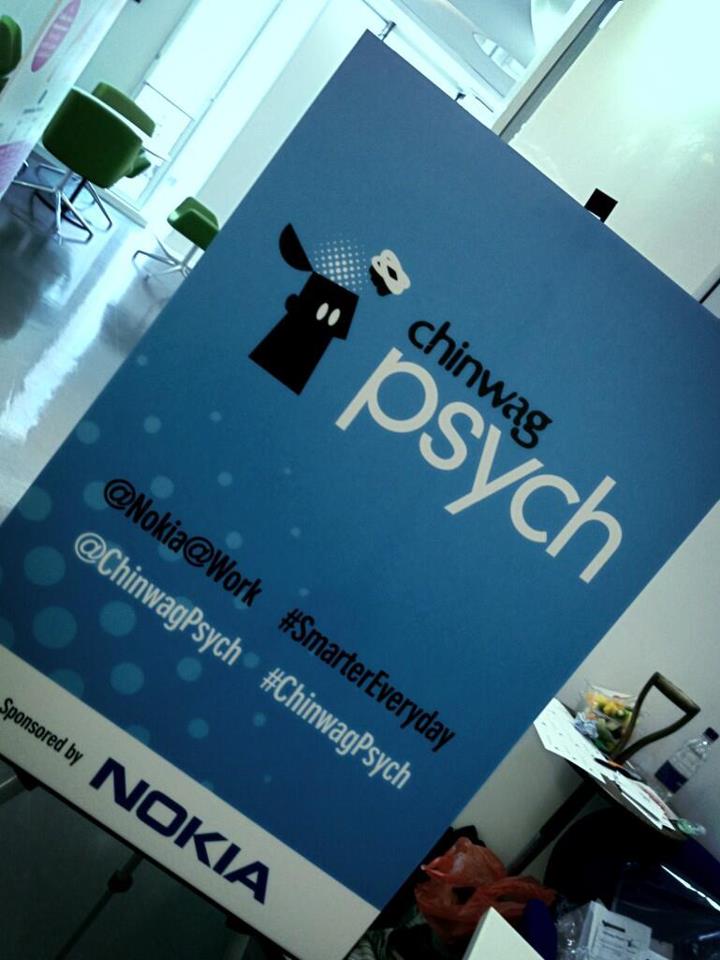
On Thursday the 9th of May Damon Klotz from The Fetch Community Ambassador team in London went along to the Chinwag Psych event that was put on by Chinwag and hosted by Nesta.

Chinwag Psych was a one day conference that covers psychology, neuroscience and big data for business and marketing. The event gave me a chance to not only flex my brain muscles for a day but also check out a new part of London having only been working in the city for a couple of weeks.

Using my trusty London City Mapper App (a must for any tourist or newbie Londoner) I set off towards Chancery Lane. As good as the app was at getting me to the right area I still managed to walk around in circles trying to find the building, but I did so with a determined look upon my face that said I know exactly where I’m going and I meant to walk up and down the same street twice.

After finally finding the right building I navigated my way to the all important row of seats near the power points, crucial for any prolific tweeters or bloggers in the audience. I was looking forward to being a member of the audience. Sitting back and listening, I enjoyed not dealing with the pressure of being the speaker.

Chingwag impressively fit 15 speaker sessions into the one-day conference, so I had my laptop out ready for the inevitable information overload.

The conference was split into four sections: approach, optimize, predict & behave. Rather than trying to summarise every single speaker I’m going to highlight some of the key takeaways from each of the sessions including links to some of the really useful slideshares.

–        Natalie Nahai spoke about the art of persuasion to selling more online and had a handy hint for how to get around the fact that The British don’t like tooting their own horn “Greying out the overt sales message on your website is a way to keep the copy there but make it less brash!”

–        Craig Sullivan boldly told us to shut up and listen. Listen some more. Ask good questions. Repeat. He had everyone engaged and snapping photos of his slides where he taught us how to practically apply psychological insights, customer feedback, behavioural and analytics testing to split testing. Nothing I write will do his talk justice so all I will say is his slideshare is a goldmine of information that you should definitely have a look at.

–        Stephen Haggard & David Stillwell spoke about their research that was picked up by news publications around the world  that argued they can predict future behavior and determine your sexuality, political leanings and intelligence just based on your facebook likes. It was fair to say that everyone in the crowd was enthralled but also a little on edge and double-checking their facebook security settings!

–        Cat Jones from Unruly Media spoke about the science of sharing videos online. She raised some interesting points such as the fact that you can’t predict sharing, the average share rate of a video is only 4%, 2013 will see the rise of the prankvert due to no major events to jump on the back of in 2013 & that 25% of all shares happen in the first three days.

–        Daniel Bennett & Marina Clement from Ogilvy Change, the behavioral science practice of Ogilvy, finished the day off with their case study on how they significantly increased subscriptions to The Times. This case study successfully applied many of the techniques that were spoken about during the day. They used four nudges of psychological pricing, choice overload, superiority bias and setting defaults to provide a return of £1:£257.

I left the event feeling more exhausted and brain dead then I usually do when I am the one up on stage. So much to absorb in a short space of time, luckily I could look back at the hashtag for the event and the slideshares from the presenters to go back over it all. My biggest takeaway was that there are lots of ways that we can optimize our websites and blogs that will help engage, persuade & sell. Optimising requires constant analysis and given the amount of data that we now have available, there is no excuse to not be listening to our audience and constantly tweaking our sites to get the best from them.

All of the presentations from throughout the day can be found here.

_ _ _

About our Ambassador // This article was contributed by Community Ambassador Damon Klotz. Damon splits his time between being an intrepreneur by day at Ramsay Health Care, where he heads up Digital Strategy. He also cofounded a men’s mental health campaign, Soften The Fck Up, and blogs about the application of digital tools in business and the start up world.

Interview: London Local, Alex Shebar of Yelp — May 16, 2013

Interview: London Local, Alex Shebar of Yelp

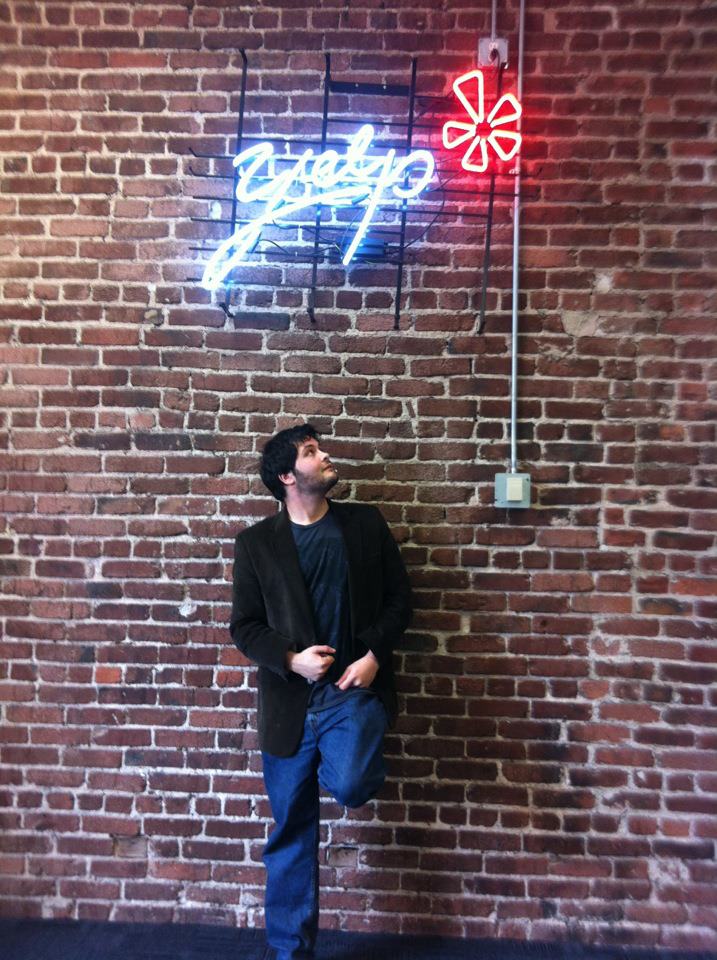
This week Eliza interviews self-proclaimed king of all trades and Yelp’s Senior London Community Manager, Alex Shebar. Follow Alex on Twitter via @alexshebar.

Alex Shebar
Alex Shebar

You’re currently working as Yelp’s Senior London Community Manager. What part of your job requires the most creativity?

You’re going to scoff at me when I say this but it’s keeping London from not being boring. What? London? Boring? Never? Yes! It can be, when you go to the same restaurant or the same bar or the same event week in and week out. There’s so much to do in this city that a lot of times, people start to take it for granted. They begin to go to where they already know over and over. I throw a ton of events that show off amazing hidden gems, new food, crafted cocktails and things people have never seen before. I’m showing off new spots to my entire community, even to those who have lived here all their life. Finding ways to get people out of a rut and routine, that’s what requires more creativity.

Also, it takes some serious creativity on how not to get fat eating and drinking with the yelpers all the time. I’m not sure I’ve figured that part of the job out yet.

As a U.S. transplant and former Yelp Cincinnati CM, what surprised you the most about the event scene in London?

London is insane when it comes to events, and I mean that with love. You can literally be out every night of the week and not see the same thing twice. Hell, you can be out every night of the year and still not see the same thing twice. Also, I’m always shocked how early places close here compared with the US. Most bars shut up shop about 11pm/midnight. In the states, that’s when you’re just getting started, here it’s when they’re sending you to bed.

Having worked with multiple Yelp communities, what do think is the secret to creating a great offline community?

Honestly, the secret to a great offline community isn’t anything people don’t normally do in their daily life. Find fun people and put together fun things they want to do.

People may say they’re too tired to go out or it’s hard to meet new people, but if you can give them an event or a reason that sounds like something they just can’t miss, they’ll step out of their comfort zone, move away from the computer and actually be part of the community in real life. It’s all about authenticity and creativity.

Do you perceive a difference between the attitude towards online community in the U.S. versus the U.K?

When I moved to London, everyone I knew went, “Oh, everything is going to be so different.” Honestly, not so much. It’s like that scene in Pulp Fiction where it’s the little differences that get you (like Where’s Waldo being called Where’s Wally here. What?) But overall, no, a community of people who are interested in great local spots are the same from country to country. In England, people may be a little more hesitant to come out to events without knowing other people there first, but even that is small.

Word on the street is that Yelp found you through Twitter. Would you share the story behind that?

True! I was doing a major year-long project called Watch This where we were screening the American Film Institute’s Top 100 movies in a year, two movies a week. The project basically started in the living room and basements of friends’ houses where we would watch the films and invite anyone to join. It grew larger and then businesses started coming to me asking if they could show them. Eventually we were doing screenings for hundreds of people. At the same time, Yelp was looking for it’s first community manager in Cincinnati, Ohio.

They found me on Twitter, we got talking, they encouraged me to apply. That’s how it all began. So don’t ever let people tell you Twitter is a waste of time. Have them come talk to me.

Your career started off in writing and communication. What advice would you give to aspiring members of the tech community who struggle with writing?

Good question. It would have to be the same advice I was given when I was a journalist writing about complicated issues. Start by thinking about how you’d explain it to a child. Write that out. At this point, you’ll have the basics of whatever you’re talking about. Now you can spruce it up and make it sound a little better and submit something worth reading. Really though, people struggle the most with writing at the beginning because they don’t know where to start. Start there.

If you could only watch one film for the rest of your life, what would it be? 

Tough question! Probably O’ Brother Where Art Thou. I still can’t say why I love that film so much (besides the great story and fantastic music) but it’s just damn good.

_ _ _

About our contributor // Eliza Dropkin is a lover of live music, good food, and beautiful places. Connect with her on Twitter via @elizadropkin.

Design a site like this with WordPress.com
Get started