Every year Kea’s Inspire Days helps hundreds of Kiwis by putting our best and brightest on stage to tell their stories. This year was no exception. Ambassador Deirdre Dawson attended the event this year and walked out the door with a real spring in her step.
Catherine Robinson, Kiwi Landing Pad
Inspire – From Surviving to Thriving
‘New Zealand being on the cusp of something big’ was the recurring theme of the Inspire 2013 event. Hosted by KEA and AUT, it boasted some of our finest leaders currently excelling on the worldwide stage.
The speakers were indeed inspirational, from scientists to systems analysts, young to old, with a strong female contingent taking the stage. It was thoughtfully noted that Maori and Pacific Island speakers were missing from the line-up and would no doubt be changing in the future. Speakers included:
Key points to take us from ‘surviving to thriving,’ reiterated by numerous speakers, included the need to drop the “she’ll be right attitude,” we can do better! However to nurturing the innovative “no.8 wire” beliefs Kiwis are so famous for will lead us to success in the future.
The audience was encouraged to be courageous and confident in sharing their stories, and to keep asking the impossible questions.
From a business perspective we look at overseas markets and the most exciting element is the size of the market. And we head off suitcase in hand ready to sell to a market often 100+ times our local domestic market but, our sales and marketing collateral are often based on what has worked in New Zealand. Succeeding offshore is being able to adapt to the market, fast. – Catherine Robinson, Kiwi Landing Pad
It was brilliant to hear from Catherine Robinson who spoke about the Kiwi Landing Pad in SoMa, San Francisco. This area is home to 8000 startups within a 2km block and is the bricks and mortar space for Kiwi tech companies wanting a piece of the American Pie. Read more about Cat’s talk here.
Thanks KEA. There was certainly a buzz and sense of pride in the air as people emerged from the auditorium. Guests walked away feeling taller, part of something a lot larger and indeed inspired.
—
About our Ambassador // This article was contributed by Community Ambassador Deirdre Dawson. While she is currently working on the person to person rental startup Rentaholic, her varied background includes being an official Ambassador for Kohu Road ice cream, Business Manager for Disruptiv Graffiti Collective including Disrupt Magazine and Disrupt Gallery and teaching in Japan.
This week Eliza interviews the founder and Editor-in-Chief of Quibb.com, Sandi MacPherson. Follow Sandi on Twitter via @sandimac.
Sandi MacPherson
You are the founder and Editor-in-Chief of Quibb. What is it about your job that gets you out of bed and into the office every morning?
Sometimes when I tell people I’m working on a news product, they roll their eyes and say ‘…another one?’. That attitude is exactly what I think makes the job fun, interesting, and challenging. News is a busy space with no clear winner and it’s a huge market. It’s an established product category with a lot of room for innovating, and plenty of challenges to keep the work exciting.
Beyond that, it really is all about the people. I’ve spoken to so many Quibb members that have had really positive experiences (both online and offline) that wouldn’t have occurred without the product, and it’s amazing to be able to help those interactions occur and relationships develop. My experience with Quibb has also been a bit self-serving, in that I’ve built the perfect learning tool for myself. I’m new to the tech/startup world, and Quibb is a professional news product. This means that it allows me to easily find and read about exactly the topics, trends and news that I need everyday. The first thing I both need and want to check in the morning is Quibb, which is perfect!
Some would describe Quibb as a Reddit for professionals. Why do you think this kind of platform is so appealing?
There’s so much content available to professionals (especially those of us that work in tech/startups) and it’s getting more and more difficult to find really great content. It’s even more difficult to have interesting discussions around that content with topic experts and professional peers. Through the simple idea of ‘share what you’re reading for work’, Quibb allows professionals to share all the great content they’re reading – and with a basic follower model, others can also get a feed packed full of great content, directly from people within their industry. The initial Quibb membership is focused on tech and startup professionals (i.e. designers, founders, VCs, developers), and will eventually allow professionals from any industry vertical to see what experts and thought leaders from their particular niche are reading and what they think about it. The role of industry journals and trade publications hasn’t evolved at the same pace that social sharing has, and I think there’s a big opportunity to learn from sites and communities like Reddit, Tumblr, Hacker News, and others – but with a context that is 100% professional.
Do you think the popularity of news/content aggregation will continue to grow, and do you have any predictions for the future of the content sharing website?
There will always be a need for professional news. I believe that great content will win, irrespective of where it comes from.
Traditionally, news organizations have been about vertical integration of content, ads, and distribution. Now this ecosystem is becoming fragmented, where each of those 3 is its own ecosystem. Great content will increasingly find distribution because all of the aggregators and various curation products exist and are seeking that content out – they’re making it easier for people to find it
In the past, the editor-curated model was the most popular – someone within a news organization was responsible for determining (based on a variety of factors) which content to promote. Today, people are more enabled to seek out content that interests them. Running this experiment over the past few years, it turns out that sometimes this leads to more funny cat pictures and less serious journalism. The news market will grow and become more efficient over time. Similarly, I believe that we’ll create and people will find much richer and fragmented ways for both distributors and creators to monetize their audience via many different publishing platforms across many different monetization models.
All of this means that everything is becoming more complex… but that’s what an efficient marketplace looks like, that’s what progress in this space will look like.
You’ve been a leader in ensuring transparency between the Quibb and its users throughout the site’s development. What do you see as the benefits of transparency, and what advice would you give to young startups looking to be proactively transparent for their user base?
I’ve written lots of posts on Quibb – everything from why I’ve added new features, to explaining what I’m working on at the moment and why. Personally, I don’t really think of it as a novel approach, and don’t really understand why I wouldn’t act this way! Part of the reason why it makes sense specifically for Quibb (and potentially other products in this product category) is that the product itself is the members – it’s built on their connections, the content they share, the discussions they partake in. It would be silly for me to not initiate a relationship with the members. Also, I often say that I view all Quibb members as ‘mini-advisors’. My background isn’t related to tech or startups, while almost all Quibb members have expertise in an area that touches the product (e.g. interaction design, email deliverability, community management, etc.).
The fact that I’m so open is a way to initiate discussions with members whose opinions and thoughts I really value, and can learn a lot from as I try to make the product better.
You previously spent your career as a climate change and cleantech professional. What do you attribute as the cause for your move from the environmental sector to the startup world?
It’s complicated 🙂 I worked for Environment Canada (Canada’s federal environment department) directly out of school, followed by positions with a few smaller climate change non-profits. After realizing how hard it is to actually have an impact and create change through those types of organizations, I decided to go back to school and get my MBA, focusing on Corporate Social Responsibility. I was very disappointed when I realized that all of the things that I was learning about there wouldn’t be very impactful either. Since 1/2 an MBA is both useless and expensive, I decided to finish my 2nd year – but I shifted my classes to align with my personal Plan B, which had always been entrepreneurship, specifically something tech related. It’s then that I started going to some startup events in Toronto, and got a taste for all of the things I could potentially work on and create. I started by working on a professional volunteer matching product, but never made it very far. I realized pretty quickly that while the Toronto startup ecosystem is full of talented, super smart people – the quickest and easiest way to de-risk any idea or product that I would work on in the future would be to move to the valley. So I did.
Which Bay Area events or communities are you involved in?
Honestly, not very many. The community that has developed on Quibb has provided me with more connections with great tech and startup people than I could ever hope for! I’ve hosted a few Quibb member-only events too (one in Palo Alto, two in SF, and most recently one in NYC) which have gone over really well. I’m hoping to do more of these in the future, as I think that connecting with Quibb members that you meet online is really important, and helps to strengthen those relationships.
Blue Bottle or Philz?
New Orleans Iced Coffee from BB – straight black (…which I have to convince them to serve to me, most occasions).
_
About our contributor // Eliza Dropkin is a lover of live music, good food, and beautiful places. Connect with her on Twitter via @elizadropkin.
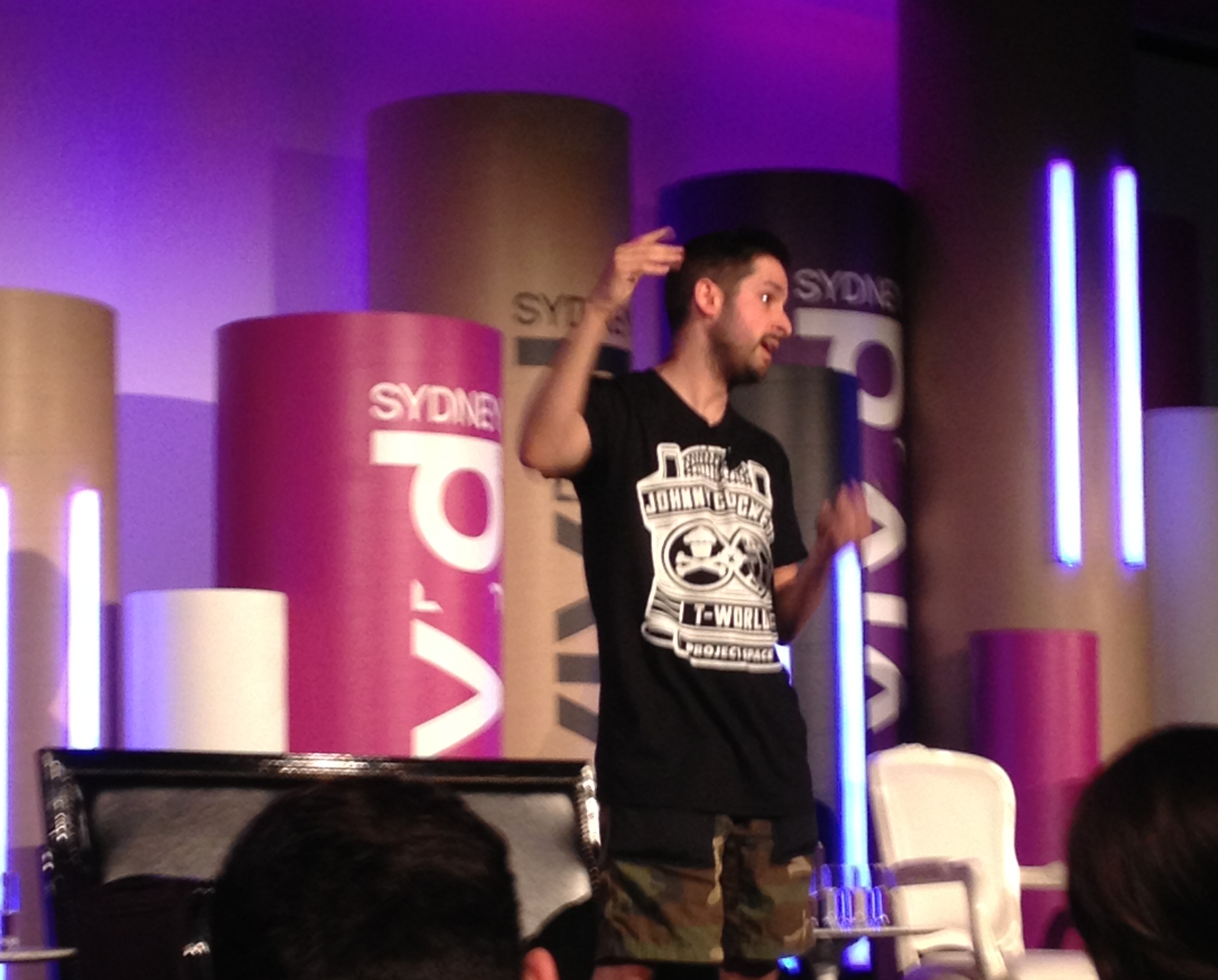
I’m pretty sure I booked my ticket for the Vivid Keynote the day the schedule was released this year. I got my first Johnny Cupcakes t-shirt as a gift in 2006 and the brand has been on my radar since then. They’ve developed a bit of a cult following over the years, proving they are more than just a t-shirt company. Fans of the brand have gotten Johnny Cupcakes tattoos (I even saw a few in the audience during the talk at the MCA).
Johnny Cupcakes (aka Johnny Earle) started the company operating from the truck of his car, selling t-shirts on the road while touring with his band. The company has now grown into a multi-million dollar business with physical store in multiple US locations and now London, in addition to the online shop.
His keynote at Vivid told the story of his journey as a young entrepreneur and the steps that led to starting his company. He also shared some lessons in business that he believes has helped Johnny Cupcakes grow and become a success. I walked away with two main themes that really stuck with me from his talk.
Lesson one: Invest in your company
A point that Johnny made several times was the importance of reinvesting profits into the company. When he was in school he used to buy items like prank toys (i.e. whoopee cushions) and candy bars to sell to his classmates. It sounds pretty trivial until you find out that he was moving about 200 packs of candy per day and making approximately $1,000 in cash that, in the words of Johnny, “the government didn’t know about.” As a young kid it would have been easy for him to spend that type of cash, but he didn’t, he reinvested. He went to the shop and bought more candy or prank toys and was thinking about what was next on the agenda.
He did the same with Johnny Cupcakes, on a slightly larger scale. He talked about how he made his first million by age 24, but he wasn’t rich. He claims he did and still does probably have a similar looking bank account to many people in the room because he always believed in putting back into the brand he built.
Lesson two: Consider what makes your brand unique
Johnny said he gets approached by 50+ young people every day who say they want to start their own t-shirt brand. He thinks it’s great and encourages them to go for it, but does give the advice that they need to consider their own unique positioning. There are thousands of t-shirt brands out there, but what will make yours stand out. Fans camped out for 24 hours waiting for the Johnny Cupcakes London shop to open, and that’s certainly not something that happens for just any t-shirt store that decides to open.
Lesson three: Value the personal touch
I’ve been to a couple really good talks recently that spoke to the important role that “non-scalable” activities can play in startups. There is so much hype and talk around things like growth-hacking and automation or spending your time figuring out how to maximize output and minimize input in business. So it’s really refreshing when you have someone like Johnny who stands up and talks about how he still writes hand-written notes in customers’ orders some days from the store.
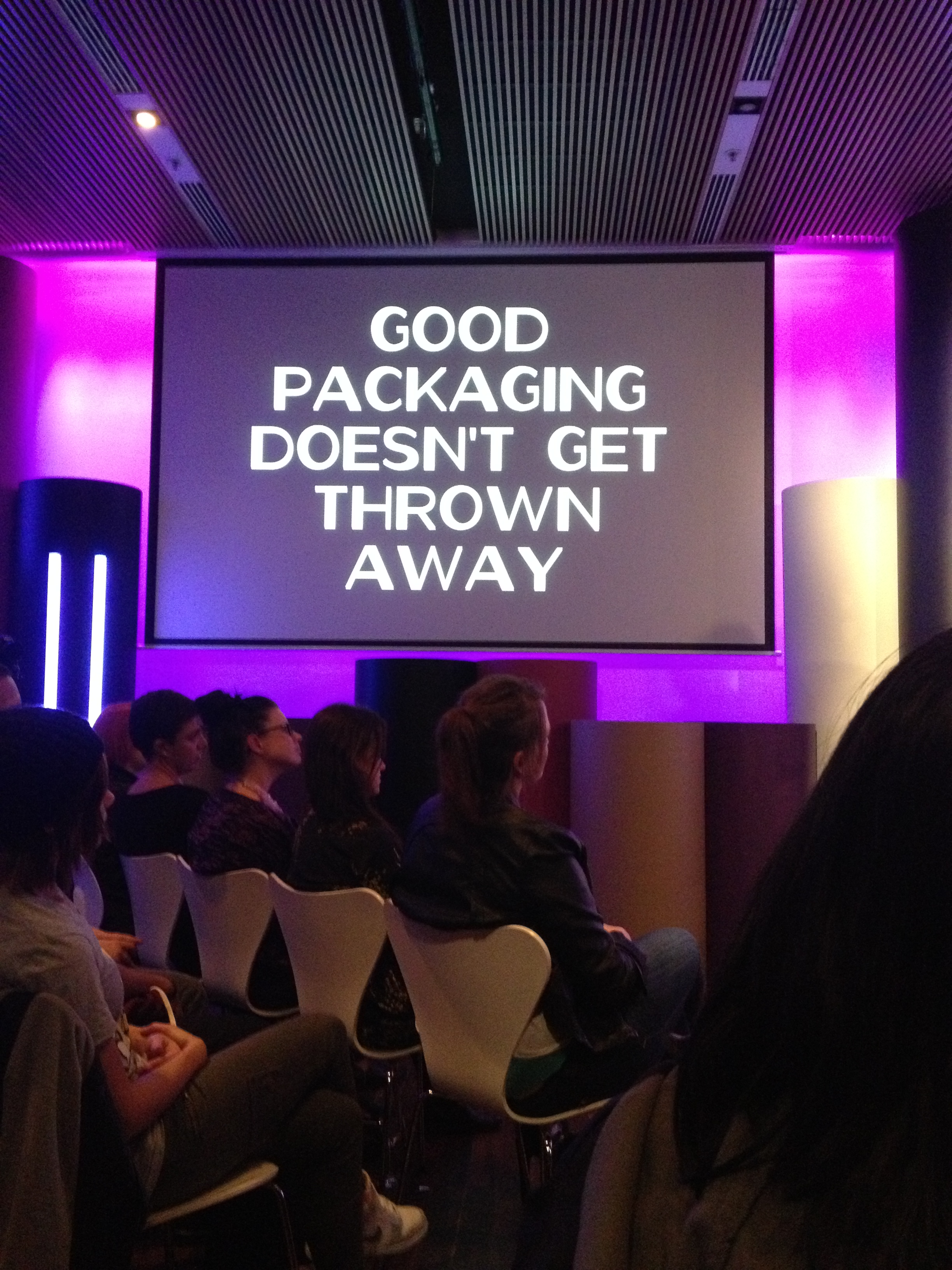
Johnny said details like the packaging were always important to him. It needed to be special and up to certain standards to delight the customers, even if it meant loosing money or a lower profit margin. He wanted to sell his t-shirts in packaging that didn’t get thrown out, and cited Apple as another company who does this extremely well.
Another great story came from when they were looking to build and open their store in LA. Johnny stressed how important it was to create a store that didn’t just sell clothing, but created an experience when you visited it. They hired the same design team that had worked on clients such as Disney in the past to help create the new LA shop. They built fake ovens into the wall that opened and closed by themselves and released fake steam. They spent $700,000 on those ovens (and they weren’t even real ovens) that took them well past the original $60,000 budget for the entire store. However, in the end that risk paid off, and the Johnny Cupcakes brand continues to create an experience for its fans.
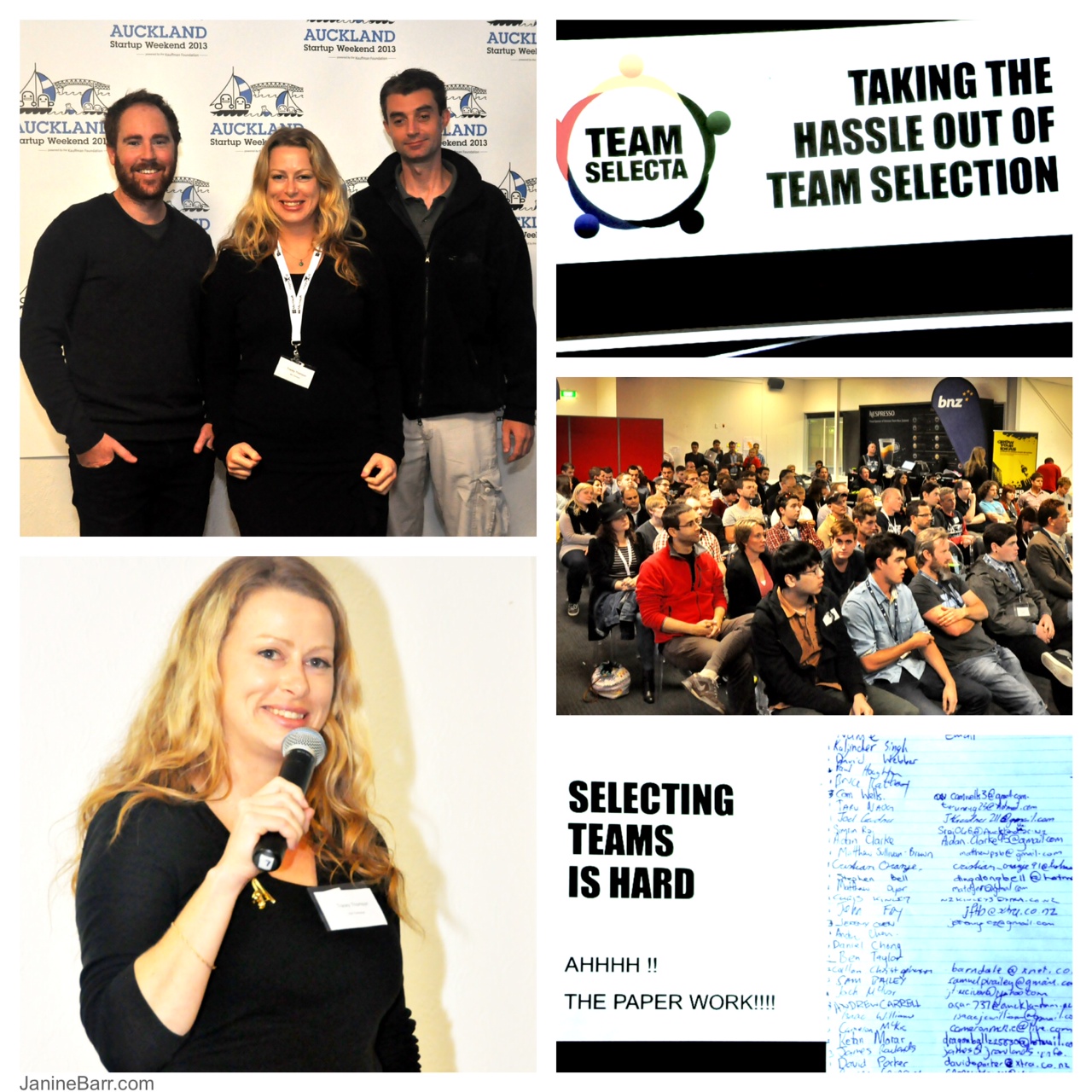
On Wednesday the 16 of May Deirdre Dawson from The Fetch Community Ambassador Team in Auckland went along to the Startup Weekend Auckland event.
Photo Credit: Janine Barr
Hipsters, Hackers and Hustlers Unite
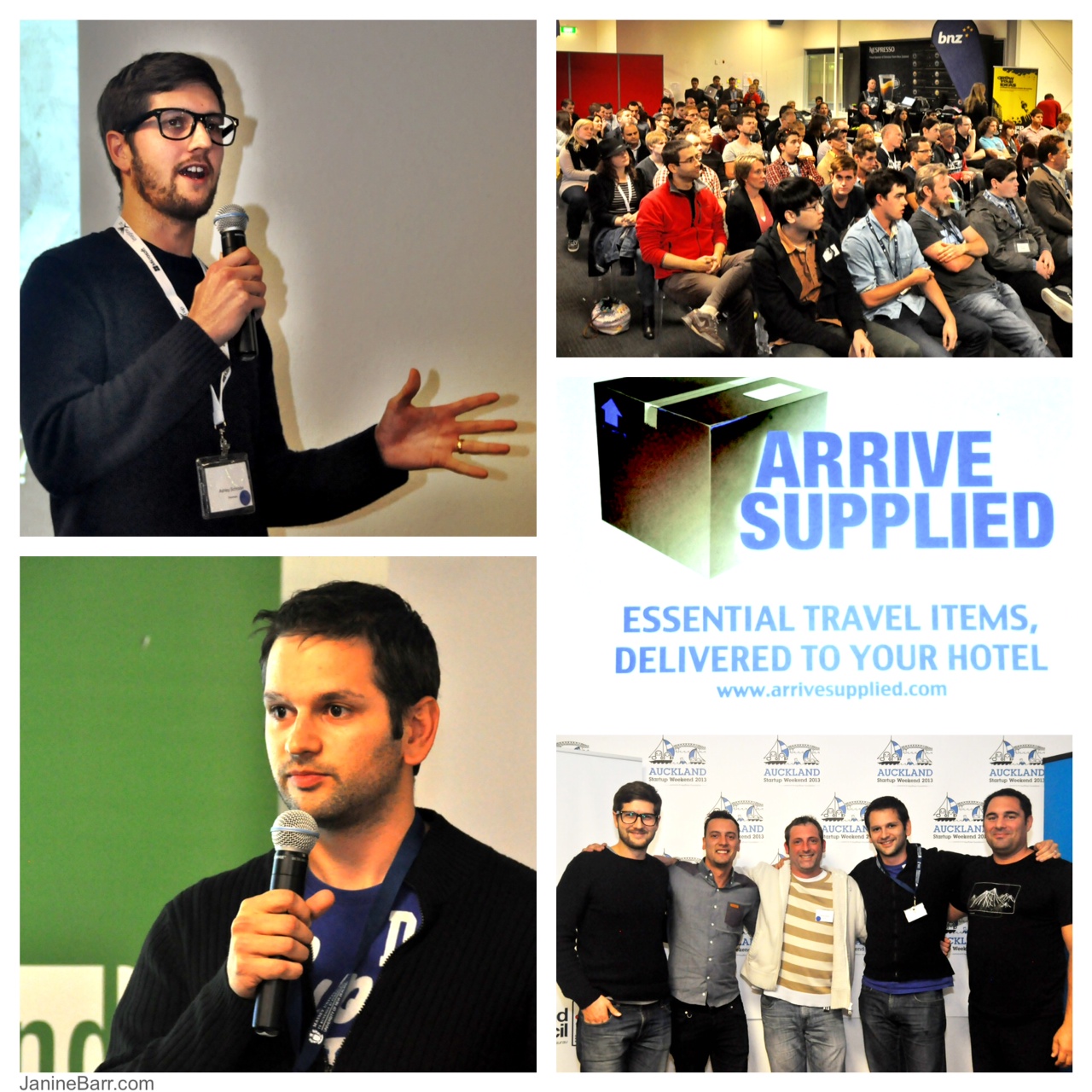
Auckland recently hosted its third annual Startup Weekend at the Emirates Building in Wynyard Quarter. Startup Weekends began in Seattle in 2010 with a vision of ‘inspiring change in entrepreneurs’. It seems to have worked with over 110 countries having adopted the frenetic event and this being Auckland’s third such event.
2013 saw close to 80 attendees who classed themselves either as hackers, hipsters or hustlers otherwise know as programmers, designers or those skilled in other areas of ‘non-technical’ business.
All participants are encouraged to pitch a new idea – the guise being to create something from scratch. An excited, nervous energy lingered around the room as people lined up to wow the audience with a 60-second pitch. From here, it was an organic selection process whereby those with the strongest ideas and most persuasive leaders shone. Within 90 minutes of the pitching session, all teams were formed and the game was on.
Photo Credit: Janine Barr
The next two days were then spent conceptualizing, formulating, planning, validating, designing and in some cases, launching a new business. Mentors volunteered their time to assist with the curly questions, playing a massive role in the development of ideas. The fact that these experts in their field willingly give up their time and energy is a fantastic indicator of the thriving Startup scene here in Aotearoa.
Final pitches were on Sunday night in front of a panel of four judges all of whom are well respected in the business community. Teams had five minutes to share their workings from the weekend and convince the panel why their business would succeed. A high caliber of ideas were taken from conception and into the real world over the weekend, with an average of a third of them expected to still be operating in three months.
Startup Weekends are an excellent event for entrepreneurs of all flavours. Often misunderstood by their boundless optimism and never-ending torrent of ideas, events like this create a nurturing environment where everyone is welcomed to the start-up family. Those interested should get it quick for the next event scheduled in November.
For more information about the event, winners, judges and general hype, check out www.startupweekend.co.nz
—
About our Ambassador // This article was contributed by Community Ambassador Deirdre Dawson. While she is currently working on the startup, Rentaholic, her background includes steering Disruptv gallery as the business manager of the multi faceted creative company which specialised in large scale murals, graphic design, event management and graffiti workshops.
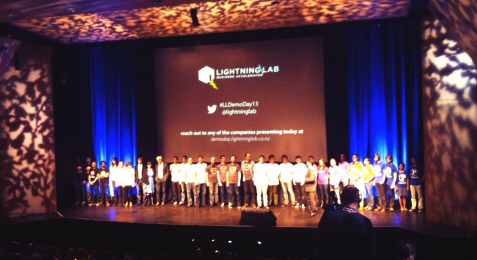
On Wednesday the 15 of May Katherine Field from The Fetch Community Ambassador Team in Wellington went along to the first Lightning Lab DEMO day event.
Photo Credit: @wedophotography
Last Wednesday I was lucky enough to squeeze into the much-anticipated Lightning Lab Demo Day at Te Papa in Wellington. The hype surrounding the finale of the country’s first digital accelerator programme had made tickets hard to come by, as organisers tried to make sure the most important guests – the angel investors – got in the door.
After weeding through 80 applications earlier this year, nine teams were selected for the Lab and were propelled through a 90-day boot camp of intensive validation and mentoring, before being thrust in front of New Zealand’s investor community.
Here’s a 30 second breakdown of the startups:
LearnKo – a platform for native English speakers to interact with and teach Asian English language students.
Adeez – Targeted lead-generation platform for mobile advertising.
Teamisto – Making sports-club sponsorship spend worthwhile.
Publons – A public peer-review platform that enables academics to gain reputation for their reviews.
WIP – A new way to share and review work-in-progress videos.
Questo – Applications that allow museums, zoos and other attractions to engage with their visitors.
Expander – Utilising QR codes to track products in order to combat counterfeiting.
KidsGoMobile – Online platform that gives parents greater visibility over their children’s smartphone use.
Promoki – Social media advertising that doesn’t look or feel like advertising
The event was entertaining and fast-paced, and the presentations were impressive. Weeks of having their pitches re-worked and re-hashed over and over again did wonders for these teams. With a head-mentor providing an insightful and heart-felt introduction, each team’s representative emerged (complete with annoying corporate title) to strut their stuff and make their case for investment.
Two keynote speakers, oddly both from the online social gaming scene, provided a break from the onslaught of pitches. Mitch Olson from SmallWorlds was engaging as he spoke about collaboration and the ecosystem of innovative business in New Zealand. Fresh from the announcement of the closure of MiniMonos virtual world, Melissa Clark-Reynolds talked about the recent event and shared her experiences from her participation in Springboard, the UK accelerator programme.
At the end of the day, media and general riff-raff were kicked out politely as the investors were ushered into a room for some wheeling and dealing with the teams. Although not everybody was signing on the dotted line, it was an opportunity to have serious conversations – sans tyre-kickers.
The after-party kicked off at Mac’s Brewery once the important discussions were complete. The teams, investors and supporters, some who were happily stranded in Wellington by some serious fog, celebrated the culmination of months of hard work and Lightning Lab’s successful maiden voyage.
Behind the hype, this was a serious investment round. There was no winner, no grand prize, no trips to Silicon Valley or celebrity judging panel. The teams I spoke to were counting their success in number of business cards. However, they all acknowledged the real winners would be decided over the weeks to come, when hangovers fade and pen is put to paper.
–
About our Ambassador // Katherine Field is one helluva busy lady. In between holding down the fort as the Community Manager at the BizDojo, she is also back at university and helping to coordinate Startup Weekend Wellington. Find her on twitter as @kathfromwelly







 The Fetch Blog