The Fetch Blog

Curated reads and events for professionals

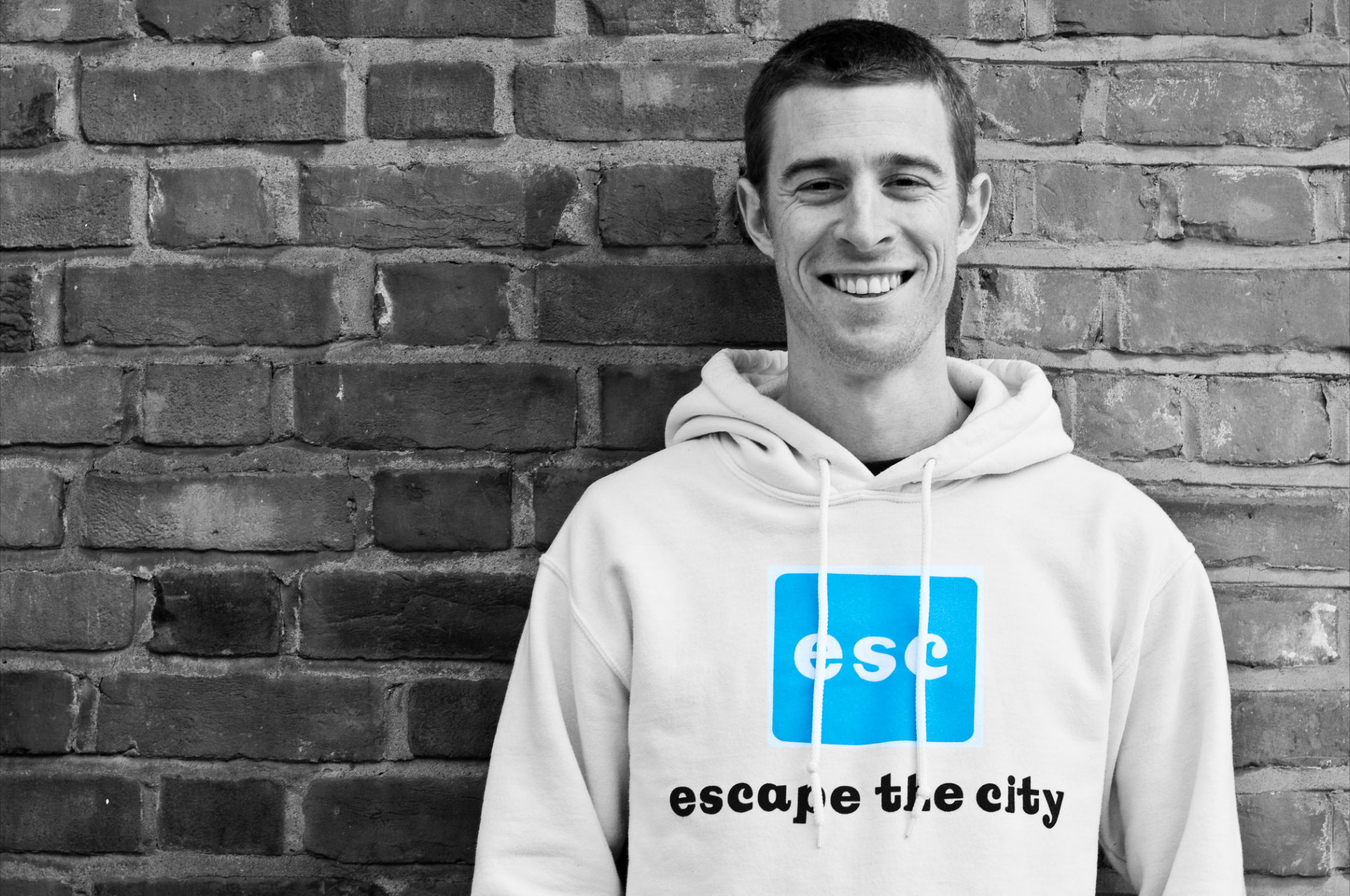
Interview: London local, Rob Symington, Escape the City co-founder — May 4, 2014

Interview: London local, Rob Symington, Escape the City co-founder

bw1

“Too many startups chase quick success and funding. I think ideas and teams need to gestate… It takes guts to think long-term.”

Louise Potter catches up with Rob Symington, co-founder of Escape the City.

What inspired you to create Escape the City?

I met my co-founder, Dom Jackman, when we were both working as management consultants in “the City” – London’s financial heartland. We were inspired by our own frustrations with the corporate career ladder – too much meaningless work all aimed at a one-dimensional pursuit of profit. Bored and ambitious, we wanted to spend our careers working on things that mattered to us. When we realised that we were far from the only people to feel this way, we decided to start a community for all the other people who aspired to build careers outside the corporate mainstream.

How is it positioned differently from other careers sites?

Whereas most career sites align to a sector (ie. tech) or a skillset (ie. developers), we align to an emotion – namely that feeling that life is too short to do work that doesn’t matter to you. We’re also a community first and a business second. Our bible is Tribes by Seth Godin. We didn’t invent this emotion, we simply chose to put a flag in the sand for anyone who feels the same way. Fortunately for us, many people do, and over 140,000 people have joined Escape the City in pursuit of careers that matter (to them and the world).

Startup life is a long way from the city. What’s been the biggest adjustment to make from leaving the corporate world?

The buck stops with you in a startup. In the corporate world you can almost always count on someone else being ultimately accountable for a problem. The other adjustment, which is a positive one, is that we’re massively more productive working in a startup. In the corporate world there was so much work for work’s sake. Now everything we do (and we do a lot of work) is directly aligned to achieving our goals.

You crowdfunded £600,000 to build Escape the City – were you happy with this approach in hindsight?

Absolutely. We had a real head vs. heart decision to make when we turned down one of London’s top VCs to raise investment from our own members. No regrets at all. Escape’s brand stands for rejecting the mainstream and doing things differently. It would have been pretty rich if we’d gone straight back to the corporate world for our funding.

If you had to pick a job that’s been featured what would it be?

I have always loved working and travelling in Africa. One of the very first jobs we listed on Escape was for a project manager to work with the Rwandan government to setup a careers service for Rwandan graduates. It’s a job I would have loved to do. Esc was still just a side-project at that point and I remember my business partner, Dom, jokingly warning me against applying for the first opportunity that came across our radars! Almost five years on and I’m glad I didn’t.

What’s the best thing about working in London?

There is so much opportunity in London. There are so many people and there is so much positive energy. We could never have launched Esc I the way that we did in a smaller city.

What other startups are doing work that you admire – and why?

I love what the guys at Maptia are building. Straight out of uni and coding their platform themselves. They have been brave enough to take the long route to build a business that they control 100% in pursuit of a big, long-term vision. They lived in Morocco for a year to keep costs down.

Too many startups chase quick success and funding. I think ideas and teams need to gestate. The great thing about the internet is that it has massively democratised entrepreneurship.However this also means that as first-time founders, we often don’t know what we’re doing in the early days, so keeping our business alive long enough to learn important lessons is really important. It takes guts to think long-term.

Who would be your perfect boss?

Seth Godin. Or Eric Cantona. They’re both artists and they’re both brave enough to be different. In a world of uniformity that can’t be underestimated. I think the best bosses find talented people who share their values and then trust them to solve difficult challenges.

Where do you escape to?

I live on a narrowboat with my fiancé and a cat called Jack who thinks he is a pirate. We don’t have a TV and we don’t have wifi. So when I’m at home I’m (for the most part) unplugged. Living as we do, constantly connected, we’re all overstimulated. I find it’s really important to be present and be still and reconnect with my immediate surroundings whenever I can.

What updates can we look for next on Escape the City?

I’m currently on the look out for a permanent venue for The Escape School in London. The Escape School is our education arm where we produce talks and courses on the subjects of unconventional careers, startups and adventure. Watch this space!

About our writer // Louise Potter is the curator of The Fetch London. She also writes things Contagious and teaches things at General Assembly. Follow her via @louisepotter_.
Interview: San Francisco local, Paul Biggar, founder of CircleCI —

Interview: San Francisco local, Paul Biggar, founder of CircleCI

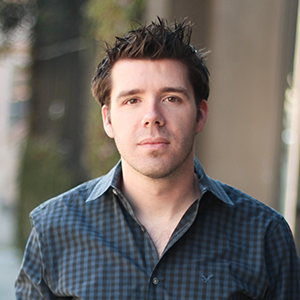
Paul Biggar

“The best things we did to be successful were to spend a lot of time talking to customers before building the product, and to focus on making a truly excellent product. We spent way more time there than on sales and marketing, and that made a real impact.”

Kate Kendall talks programming, startup lessons, the Irish tech scene and San Francisco life with Paul Biggar, founder of CircleCI.

Having been based in San Francisco for some time now, have you found it has changed much over the past few years?

The main difference is how ubiquitous tech is. SoMa is bursting with startups, rents are through the roof, the market for developers is skyrocketing, and venture money is everywhere. When I started coming here in 2009, there was a lot of tech, but it wasn’t quite popping the way it is now. And the resentment (around Google buses, etc) certainly wasn’t there.

You have worked extensively on dynamic scripting languages. Why do you think their importance has grown in software development?

I attribute it largely to the rise of the web, and also because of a dissatisfaction with Java. When the web as a platform (“Web 2.0”) was really taking off in about 2005-ish, there was massive frustration with Java. Up until that point, there were limited alternatives, and if you weren’t using Java you were probably using Perl (which was frustrating in different ways). That’s when PHP and Python and Ruby really started taking off.

Python had been slowly growing in popularity for about a decade. PHP had become the defacto language for individuals to build websites, since it was incredibly easy to deploy them. The Ruby on Rails came along and really took the world by storm. By 2009, a vast majority of new startups were using Rails, something still true today, even though there are many more options now than back then.

Most of the frustration from static languages came from inflexibility – Java was a giant ecosystem of heavyweight components, and an ugly type system. By contrast, dynamic languages were freeing. It was an easy sell.

You are a co-founder of CircleCI, a hosted continuous deployment provider, how would you describe the benefits of CI to a less technical team/person?

Developers write code, and every time they do, CircleCI automatically tests their code to make sure it still works (that’s “Continuous Integration”). It’s a productivity tool for developer teams, that lets developers ship code much faster, meaning they get their products to market faster, and keep them more reliable.

What have been some of the hardest challenges you’ve faced to date and what insights do you now have from navigating them?

Every three months brings new challenges. The challenge you have as a two person startup trying to get some adoption is a different challenge from being a 14-person startup with thousands of customers and millions in revenue. I’ve spent a lot of time looking forward to figure out what the challenges are going to be three and six months from now, and asking other founders and CEOs what the future is going to look like.

I would say the hardest thing is getting to traction. Once we got to a million in annual revenue, the future became fairly straightforward and was well carved out. But that journey to make sure we had a product that was useful, find customers for it, try to get them to pay, etc, that was a hard journey.

The best things we did to be successful were to spend a lot of time talking to customers before building the product, and to focus on making a truly excellent product. We spent way more time there than on sales and marketing, and that made a real impact. Nothing helps a customer make a decision like a recommendation from their friend, and the higher the quality of the product, the more likely that is to happen.

Do you think your previous company NewsTilt was before its time?

Yes and no. NewsTilt was predicated on the idea that journalism was becoming more niche. Instead of a reader going to a newspaper for all their news, they’d read news from many smaller sites related to their interests, like TechCrunch, or The Fetch, or other small-ish communities built around niche topics. That prediction was totally correct, in my opinion.

The other side of this is that while we anticipated the problem, I’m not sure we got the solution right. We were trying to build a platform where we’d solve all of a journalist’s problems in trying to achieve that, like distribution, revenue, etc. Nobody else has done what we were trying to do, so its hard to see if it would have really solved the problem today. Companies like Medium and Svbtle are doing well with high quality publishing and better tools for publishers, but are not really looking at community as part of their platforms.

What’s the Irish tech scene like? Do people feel they need to move to the US to build a global company?

Dublin has a nice tech scene now. There’s a lot of people building products and tools and starting companies. It wasn’t that way when I left in 2010. One of the major changes since then has been the massive explosion of US companies setting up in Ireland. Dublin was always a tech hub, and Google very famously set up there, but in the last few years about 40 large US companies like Yahoo, Facebook, Hubspot, Zynga, Dropbox, etc, have all set up there too.

During the mid-2000s, when the Celtic Tiger was booming, tech wasn’t a very glamorous profession, unlike finance and real estate which were major drivers of the economy. Now, developer salaries are rising, tech is booming, and most of the rest of the economy still hasn’t recovered. So tech is important and interesting now in a way that it never was before.

There is a lot of debate in Ireland about whether you have to move to the US and to San Francisco to build your company. I suspect its the same debate being played out in New York and Austin and London and Berlin, with the caveat that emigrating for better opportunity has been something the Irish have done for hundreds of years.

Whether or not to move has the same factors in every city: does your market and company and product benefit from being in SF, through access to capital, customers base, press, engineering talent, startup experience, etc. I’m a firm believer that the best thing an Irish investor can do to help their company is to buy the founders a one-way ticket to SF.

Where’s your favorite place to relax in San Francisco?

This sounds a bit lame, but my most relaxing time is walking my dog near my apartment in SoMa. We live just by the Bay Bridge and walk down to AT&T Park along Embarcadero and under the Bay Bridge.

What local events do you recommend checking out?

Once your company starts kicking off, you kinda stop going to that many events any more. I really enjoyed going to tech meetups once I got to SF, and then more once I started using them to network and find customers and early hires. Once CircleCI really took off, I’ve mostly stopped going to meetups, with the exception of particularly high quality events, in particular events where successful operators are presenting. 

For me, the best recent events I’ve been to are at Heavybit and Y Combinator, both of which are unfortunately members-only.

About our writer // Kate Kendall is the founder of The Fetch and CloudPeeps. She also blogs about startup life and advises businesses on the role of community. Follow her via @katekendall.

Hello Erin – our New York curator — March 31, 2014

Hello Erin – our New York curator

erin

“I always thought I was crazy with the amount of side interests I like to pursue and projects I like to take on outside of work – until I moved here and realized I had found my tribe!”

After our beta launch in New York last June, it’s been so great to see the warm reception and organic uptake of The Fetch in the city. We now couldn’t be happier to share that Erin Greenawald will be our new curator in NY. Erin has been a subscriber since the beginning and by day, is an editor at career-loving startup The Muse. We took a few minutes to ask Erin about her background:

How did you end up where you are today? 

It all started when I dreamt of being an actress on broadway at age nine. While I haven’t stepped foot in the theater since I moved up to NYC almost a year ago, I managed to make it up here somehow. I wasn’t in love with what I was studying at school in DC so took a chance at a virtual internship in a different field with a startup while I finished my degree. Before I knew it I had a job offer from them (before I graduated – the dream!) and was asked to move to NYC ASAP. Since then I’ve been happily working as an editor helping give non-boring career advice by day at The Muse!

Why did you want to get involved with The Fetch?

Networking has never exactly been my thing – I’d generally prefer to be curled up on my couch with a good book or cooking with a friend. But when I moved here with almost no network to be seen, I knew I wanted to push myself to get out there and get to know the vibrant tech and startup community surrounding me. It’s been a wild ride so far, and I know I still have so many more fantastic people to meet – and I think The Fetch will really help take me to that next level.

What things excite you about our community right now? 

I’m so thrilled to get the chance to connect with so many different people – both in NYC and around the world – who are all passionate about getting the most out of their city that they can! I think everyone in The Fetch community is incredibly busy and interesting, but also very welcoming and excited to welcome others into the circle, which is something that really resonates with me.

What events do you recommend in NYC?

I like trying to find events that are a different format than your typical networking event (see above). So panels, hackathons, dinners – anything that’s not standing around mingling keeps me interested!

What’s your favourite thing about your city? 

I love that this city is always surprising me. I’m always reading about events or festivals or art exhibits or new concept bars or restaurants and thinking “that exists?!” But of course – it’s New York City. It really feeds into my love of trying new things, and they’re often things I didn’t even know I wanted to try.

What’s unique about NYC?

I always thought I was crazy with the amount of side interests I like to pursue and projects I like to take on outside of work – until I moved here and realized I had found my tribe! So may people have their main job (which is usually pretty cool in the first place) and then the company they’re trying to start on the side or the artistic interest that they manage to keep thriving in their free time. It’s such an inspirational and motivational group of people to be around.

Where can we find you in NYC? 

During the week Flatiron is my stomping grounds (the dog park in Madison Square Park is better than coffee breaks and I can’t wait for Madison Square Eats season). On the weekends, Brooklyn usually! Once the weather finally gets nicer you’ll likely see me at the Grand Army Plaza farmer’s market and Prospect Park almost every weekend.

How can we connect with you? 

Reach out on Twitter @erinacously or email erin@thefetch.org.

If you didn’t live in NYC, where would you be? 

I’ve always felt the pull of the west coast. Seattle or Portland may be in my future, though I’m a little worried about the rain!

Live in New York? Sign up to our weekly event-packed email digests now!

Interview: Sydney local, Simon Crerar, editor of BuzzFeed Australia — March 23, 2014

Interview: Sydney local, Simon Crerar, editor of BuzzFeed Australia

headshot

Hannah DeMilta recently caught up with Simon Crerar, editor of BuzzFeedOz.

Your most recent role was with News Corp as their visual story editor before becoming the Australian editor of BuzzFeed. What are the important experiences or lessons you brought with you from your most recent role?

Continue reading

Hello Lauren – our content and production manager — March 15, 2014

Hello Lauren – our content and production manager

DSC_0002

We’re pleased to welcome Lauren Jewell as our new content and production manager. Melbourne-bred, Miami-based Lauren has been doing an amazing job of managing the processes and curators involved in curating The Fetch to its fine-tuned standards each week. We’re lucky to have her on the team!

Continue reading

Design a site like this with WordPress.com
Get started